The line between what’s real and what’s generated has become so thin it’s practically invisible.
Note: This article is for educational and informational purposes only. See full disclaimer at the end.
The firm Arup Group lost $25 million in 2024 from a deepfake scam where criminals used AI to impersonate company executives in a video conference [10].
Research shows that when people encounter AI-generated content, they successfully identify it as fake less than half the time [3].
Right now, you could be reading content, viewing images, or hearing voices that were created by machines, and you’d have no idea.
We’ve entered an era where anyone with a laptop and basic technical skills can create reality itself. Not metaphorically, but literally—crafting videos, audio, images, and text so convincing that our brains, evolved over millions of years to trust our senses, simply cannot distinguish truth from fiction [11].
The tools that once required Hollywood budgets and teams of specialists are now available to anyone, anywhere, at virtually no cost [4].
This isn’t science fiction. This is just another maze to navigate in 2025.
The Consciousness Cost of Synthetic Media
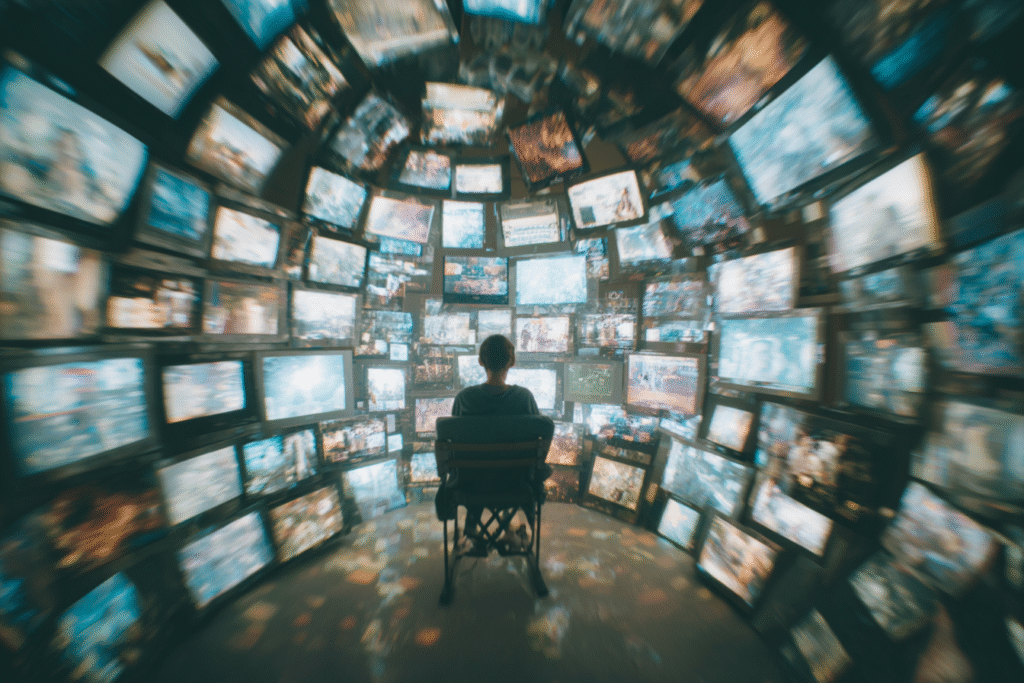
The human brain wasn’t designed for this. Throughout our entire evolutionary history, seeing was believing. If you saw a tiger, there was a tiger. If you heard your mother’s voice, it was your mother. This fundamental trust in sensory experience is so deeply embedded in our consciousness that we’re essentially defenseless against high-quality synthetic media [5].
Research from the University of Maryland reveals a troubling reality: when people encounter AI-generated content, they’re successful at identifying it as fake less than half the time [3]. But here’s what’s even more concerning—even when content is labeled as AI-generated, people still form emotional connections and memories as if it were real.
The synthetic experience becomes part of their consciousness, indistinguishable from genuine memories.
Consider what this means for a moment. Your understanding of reality, your beliefs about the world, your emotional responses to events—all of these fundamental aspects of consciousness can now be shaped by content that never happened, created by people you’ve never met, for purposes you’ll never know.
A study of over 600 participants found that frequent exposure to AI-generated content correlates with decreased critical thinking abilities and increased cognitive offloading—essentially, people stop questioning what they see [1].
The consciousness cost isn’t just about being fooled. It’s about the gradual erosion of our ability to discern, to question, to think critically about the information we consume. When everything could be fake, the mental effort required to constantly verify becomes exhausting. So we stop trying. We delegate our judgment to algorithms, to fact-checkers, to anyone but ourselves [2].
The Power and the Responsibility
Uncle Ben’s words to Peter Parker have never been more relevant than they are today.
“With great power comes great responsibility.”
The power to create infinite variations of reality, to generate any image, any voice, any scenario—this is a power that would have been considered divine just a generation ago. Now it’s available to anyone with an internet connection.
But Spider-Man had to learn to control his web-slinging. He had to understand that his actions had consequences, that the power to do something doesn’t mean you should do it. The same principle applies to every person who now holds the power of infinite creation in their hands.
A deepfake video can destroy a reputation in minutes [12]. Generated audio can manipulate stock markets [13]. Synthetic images can ignite social unrest or influence elections [6]. The firm Arup Group lost $25 million in 2024 from a single deepfake scam where criminals impersonated company executives [10].
These aren’t theoretical risks—they’re happening right now, every day, around the world.
The Architects of Influence
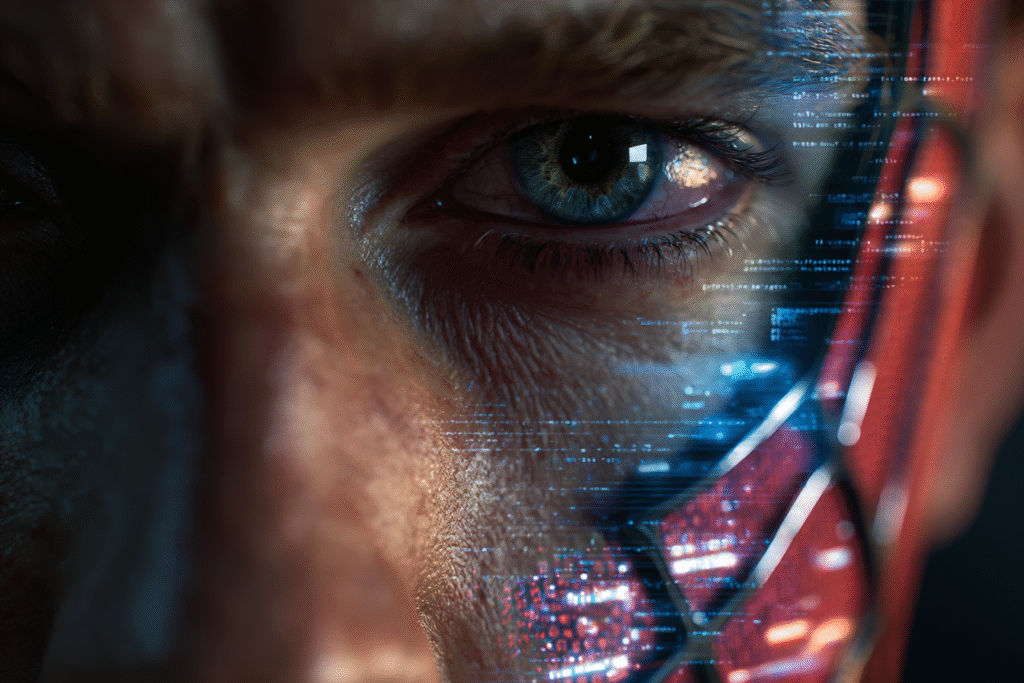
The ability to shape reality through digital creation isn’t just changing what we see—it’s changing who has power. Traditional gatekeepers of information—journalists, editors, publishers—are being bypassed by anyone who can craft compelling synthetic content [14].
A teenager in their bedroom can now create content that influences millions, shaping public opinion with the same effectiveness as major media organizations.
This democratization of influence sounds empowering, but it comes with a dark side.
Research from Harvard’s Misinformation Review found that AI-generated disinformation during the 2024 U.S. election wasn’t primarily about creating fake events—it was about amplifying existing biases and emotions [7].
The most effective synthetic media doesn’t try to convince you of something new; it tells you what you already want to believe, just with fabricated evidence.
The architects of this new reality aren’t always malicious actors. Sometimes they’re marketers trying to sell products. Sometimes they’re activists trying to raise awareness. Sometimes they’re artists exploring creative possibilities. But regardless of intent, each use of synthetic media to influence perception contributes to a world where the line between authentic and artificial becomes increasingly meaningless.
Navigating the Blurred Reality
How can we navigate this new world where anything we see, hear, or read could be artificially generated? The answer isn’t to become paranoid skeptics who trust nothing, nor is it to blindly accept everything at face value. Instead, we need to develop new cognitive skills—a kind of digital literacy that our ancestors never needed.
First, understand the tells. While AI-generated content is becoming increasingly sophisticated, there are still signs to look for [5]. Unnatural facial expressions, inconsistent lighting, audio that doesn’t quite sync with lip movements, text that seems too perfect or uses patterns that feel off. These tells won’t last forever—the technology improves daily—but for now, they’re tools in your arsenal.
Second, practice lateral reading [8]. When you encounter remarkable content, don’t just examine the content itself—look sideways. Open a new browser tab. Search for the source. Check if other reputable outlets are reporting the same thing.
This isn’t about doubting everything; it’s about verification becoming a natural part of your information consumption process.
Third, pay attention to your emotional responses. Synthetic media designed to manipulate often triggers strong emotional reactions—outrage, fear, excitement [8].
When you feel that surge of emotion from content you’ve encountered, pause. That pause, that moment of reflection, might be the difference between sharing misinformation and stopping its spread.
The Responsibility of Creation
For those who create with AI—and increasingly, that’s all of us—the ethical weight is enormous.
Every piece of synthetic content you generate contributes to the erosion of our collective ability to distinguish real from fake.
This doesn’t mean we shouldn’t use these tools, but it means we must use them thoughtfully.
The European Union’s AI Act, entering force in 2025, requires disclosure of artificially generated content [9]. But laws are just the floor of ethical behavior, not the ceiling.
Consider the downstream effects of your creations. That funny deepfake video might seem harmless, but it contributes to a media environment where people can dismiss any inconvenient evidence as “probably AI-generated.”
That synthetic voice clone might save you time, but it makes every genuine voice recording slightly less trustworthy.
The Consciousness We're Creating
We’re not just creating synthetic media; we’re creating a new form of collective consciousness. Every AI-generated image, every deepfake video, every synthetic voice becomes part of our shared information environment. These creations don’t exist in isolation—they interact with human consciousness, shaping beliefs, forming memories, influencing decisions [15].
The study of over 600 participants mentioned earlier revealed something profound: younger people, those who’ve grown up with AI tools, show significantly higher rates of cognitive offloading [16]. They’re not just using AI to help them think; they’re letting AI think for them. The consciousness cost isn’t immediate—it’s generational.
We’re raising a generation that may struggle to distinguish their own thoughts from those generated by machines.
This isn’t their fault. When AI is presented as a helpful assistant, always available, always confident, why wouldn’t they rely on it? The pathologically helpful nature of AI systems, designed to always provide an answer even when uncertainty would be more appropriate, creates a dangerous dependency [17].
We’re outsourcing not just our memory or our calculations, but our judgment itself.

The Choice Before Us
We stand at a crossroads. Down one path lies a future where reality becomes completely malleable, where truth is whatever the most sophisticated AI can generate, where human consciousness becomes so intertwined with artificial generation that we lose the ability to think independently. Down the other path lies a future where we harness these tools thoughtfully, where we maintain our cognitive sovereignty while benefiting from AI’s capabilities.
The choice isn’t made in some grand gesture. It’s made in millions of small decisions every day. Every time you pause before sharing that too-perfect video. Every time you fact-check that surprising claim. Every time you choose to think through a problem yourself rather than immediately asking AI. Every time you label your AI-generated content clearly and honestly.
Remember, you’re not just a consumer in this new reality—you’re an architect.
Whether you’re creating content, sharing it, or simply choosing what to believe, you’re shaping the information environment we all inhabit. The tools of infinite creation are in your hands. The question is: what kind of reality will you choose to build?
The power is yours. The responsibility is yours. And unlike Peter Parker, you don’t need to be bitten by a radioactive spider to change the world—you just need to be conscious of the choices you’re making in this age of infinite creation.
The greatest threat isn’t that AI will become conscious and replace us. It’s that we’ll become unconscious and replace ourselves.
See you in the next insight.
Comprehensive Medical Disclaimer: The insights, frameworks, and recommendations shared in this article are for educational and informational purposes only. They represent a synthesis of research, technology applications, and personal optimization strategies, not medical advice. Individual health needs vary significantly, and what works for one person may not be appropriate for another. Always consult with qualified healthcare professionals before making any significant changes to your lifestyle, nutrition, exercise routine, supplement regimen, or medical treatments. This content does not replace professional medical diagnosis, treatment, or care. If you have specific health concerns or conditions, seek guidance from licensed healthcare practitioners familiar with your individual circumstances.
References
The references below are organized by study type. Peer-reviewed research provides the primary evidence base, while systematic reviews synthesize findings.
Peer-Reviewed / Academic Sources
- [1] Gerlich, M. (2025). AI Tools in Society: Impacts on Cognitive Offloading and the Future of Critical Thinking. Societies, 15(1), 6. https://www.mdpi.com/2075-4698/15/1/6
- [2] National Center for Biotechnology Information. (2024). From tools to threats: a reflection on the impact of artificial-intelligence chatbots on cognitive health. PMC. https://pmc.ncbi.nlm.nih.gov/articles/PMC11020077/
Government / Institutional Sources
- [3] University of Maryland. (2024). AI-Generated Misinformation is Everywhere. ID’ing It May Be Harder Than You Think. https://today.umd.edu/ai-generated-misinformation-is-everywhere-iding-it-may-be-harder-than-you-think
- [4] U.S. Government Accountability Office. (2024). Science & Tech Spotlight: Combating Deepfakes. GAO-24-107292. https://www.gao.gov/products/gao-24-107292
- [5] University of Miami Information Technology. (2024). IT News – Deepfakes: AI-Generated Synthetic Media – Can You Spot Them? https://www.it.miami.edu/about-umit/it-news/phishing/deepfakes/index.html
- [6] PBS News. (2023). AI-generated disinformation poses threat of misleading voters in 2024 election. https://www.pbs.org/newshour/politics/ai-generated-disinformation-poses-threat-of-misleading-voters-in-2024-election
- [7] Harvard Kennedy School Misinformation Review. (2025). The origin of public concerns over AI supercharging misinformation in the 2024 U.S. presidential election. https://misinforeview.hks.harvard.edu/article/the-origin-of-public-concerns-over-ai-supercharging-misinformation-in-the-2024-u-s-presidential-election/
- [8] Virginia Tech News. (2024). AI and the spread of fake news sites: Experts explain how to counteract them. https://news.vt.edu/articles/2024/02/AI-generated-fake-news-experts.html
- [9] Center for News, Technology & Innovation. (2024). Synthetic Media & Deepfakes. https://innovating.news/article/synthetic-media-deepfakes/
Industry / Technology Sources
- [10] Wikipedia. (2025). Deepfake. https://en.wikipedia.org/wiki/Deepfake
- [11] Springbrook Software. (2024). Examining Deepfakes and the Growing Threat of Synthetic Media. https://springbrooksoftware.com/examining-deepfakes-and-the-growing-threat-of-synthetic-media/
- [12] techUK. (2024). Deepfakes and Synthetic Media: What are they and how are techUK members taking steps to tackle misinformation and fraud. https://www.techuk.org/resource/synthetic-media-what-are-they-and-how-are-techuk-members-taking-steps-to-tackle-misinformation-and-fraud.html
- [13] Sensity AI. (2025). Best Deepfake Detection Software in 2025. https://sensity.ai/
- [14] DISA. (2025). 2024 Election Misinformation and AI-Generated Hoaxes: A Review. https://disa.org/2024-election-misinformation-and-ai-generated-hoaxes-a-review/
- [15] IEEE Computer Society. (2025). Cognitive Offloading: How AI is Quietly Eroding Our Critical Thinking. https://www.computer.org/publications/tech-news/trends/cognitive-offloading
- [16] PsyPost. (2025). AI tools may weaken critical thinking skills by encouraging cognitive offloading, study suggests. https://www.psypost.org/ai-tools-may-weaken-critical-thinking-skills-by-encouraging-cognitive-offloading-study-suggests/
- [17] Medium. (2025). Day 101: The Consciousness Delegation Paradox. https://medium.com/@alexlabarces/the-consciousness-delegation-paradox-532691f39d93