Your creativity isn’t going anywhere. It’s about to be unleashed like never before.
Note: This article is for educational and informational purposes only. See full disclaimer at the end.
The fear runs deeper than job displacement.
Somewhere in our collective unconscious lurks the specter of a “creative singularity”—that mythical moment when AI becomes so sophisticated it renders human creativity obsolete, leaving us as passive consumers of machine-generated art, music, and ideas.
It’s a seductive narrative that taps into our deepest insecurities about what makes us uniquely human. But this fear rests on a fundamental misunderstanding of both creativity and intelligence. The creative singularity isn’t coming because creativity isn’t a finite resource that can be monopolized.
It’s an inexhaustible wellspring that grows stronger through interaction, challenge, and yes—even competition.
Competition Creates Champions
Consider what happens when two world-class athletes train together. Does the presence of elite competition diminish either athlete’s potential?
Research in sports psychology reveals the opposite: athletes consistently perform better when competing against other elite performers, pushing each other to heights neither would achieve alone [1].
The phenomenon, known as social facilitation in sports, shows that “the bodily presence of another contestant participating simultaneously serves to liberate latent energy not ordinarily available” [6].
This isn’t just about physical performance. The same principle applies to cognitive and creative challenges. When musicians jam together, they create sounds neither could produce solo. When writers critique each other’s work, both emerge with stronger prose. When scientists collaborate, they solve problems that would stump any individual genius.
The presence of AI creativity doesn’t diminish human creativity, it amplifies it through creative tension.
Understanding AI's Creative Ceiling
To understand why human creativity remains irreplaceable, we need to examine what AI actually does when it “creates.”
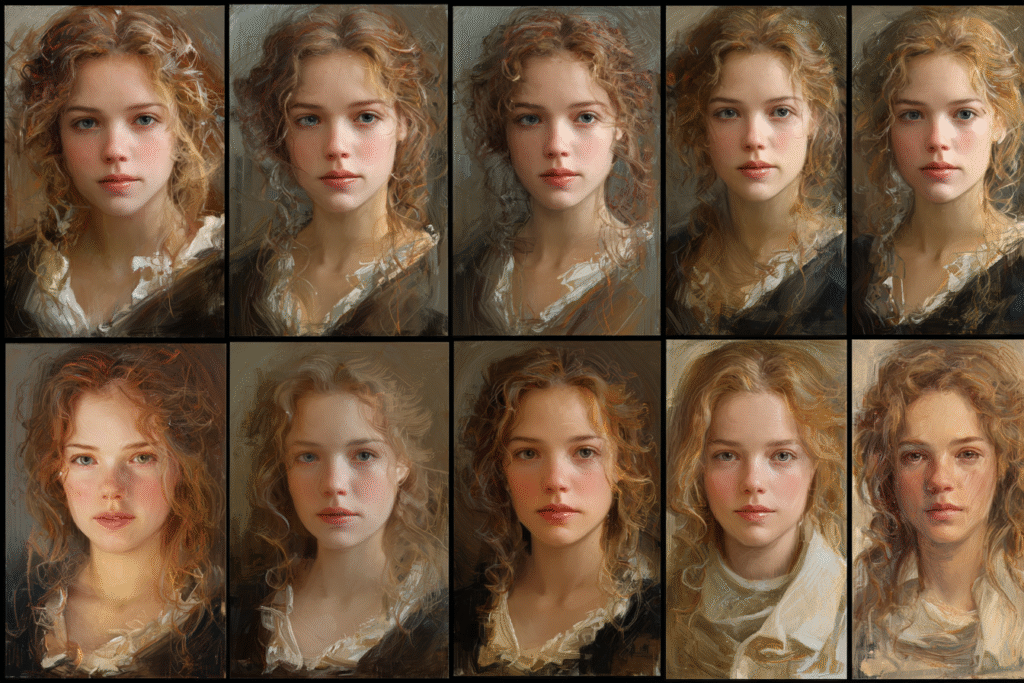
Current generative AI systems are sophisticated pattern-matching engines that recombine elements from their training data [1]. They excel at what researchers call “recombinative creativity”—mixing existing elements in novel ways—but struggle with genuine paradigm-shifting innovation.
Studies measuring the linguistic novelty of AI-generated content reveal that humans consistently outperform AI by significant margins: approximately 80% in poetry, 100% in novels, and 150% in speeches [2]. More tellingly, when researchers dig deeper, they find that AI creativity remains fundamentally derivative, lacking the ability to make “genuine and creative ideas” because it works by “remixing the information on which it is trained” [3].
But here’s what the research misses: this limitation isn’t a temporary technical hurdle to overcome. It’s a fundamental characteristic of how current AI systems work. They can create impressive variations on existing themes, but they cannot experience the lived reality that gives birth to truly original human expression.
The Irreplaceable Human Elements
Human creativity springs from sources AI cannot access:
Emotional Authenticity: When art truly moves us, it’s usually because it expresses raw, lived emotion. As one creativity researcher notes, “human art is the process and outcome of a brain that is using emotion to guide its thoughts, output and decisions. AI does not have that—it is all pure logic” [7]. The messy, irrational, deeply felt human experience creates resonance that perfectly crafted AI output often lacks.
Contextual Understanding: AI struggles with the nuanced understanding of cultural context, irony, and the subtle interplay of meaning that defines great creative work [8]. It can mimic humor but cannot truly understand why something is funny. It can replicate artistic styles but cannot feel the cultural moment that gave birth to them.
Serendipitous Discovery: Some of the greatest creative breakthroughs come from happy accidents—fuzzy guitar effects from damaged amplifiers, revolutionary medications from failed experiments, breakthrough artistic techniques from mistakes embraced rather than corrected. Humans can recognize when an error opens a new dimension and choose to explore it [9]. AI generates variations but lacks the curiosity and intuitive judgment to recognize which accidents are worth pursuing.
Embodied Experience: Every human creator brings a unique constellation of lived experiences, cultural background, relationships, and physical sensations that inform their creative work. AI has access to documented knowledge about human experience but has never felt heartbreak, never watched a sunset, never struggled with mortality. This embodied knowledge creates the raw material for authentic creative expression.
The Amplification Effect
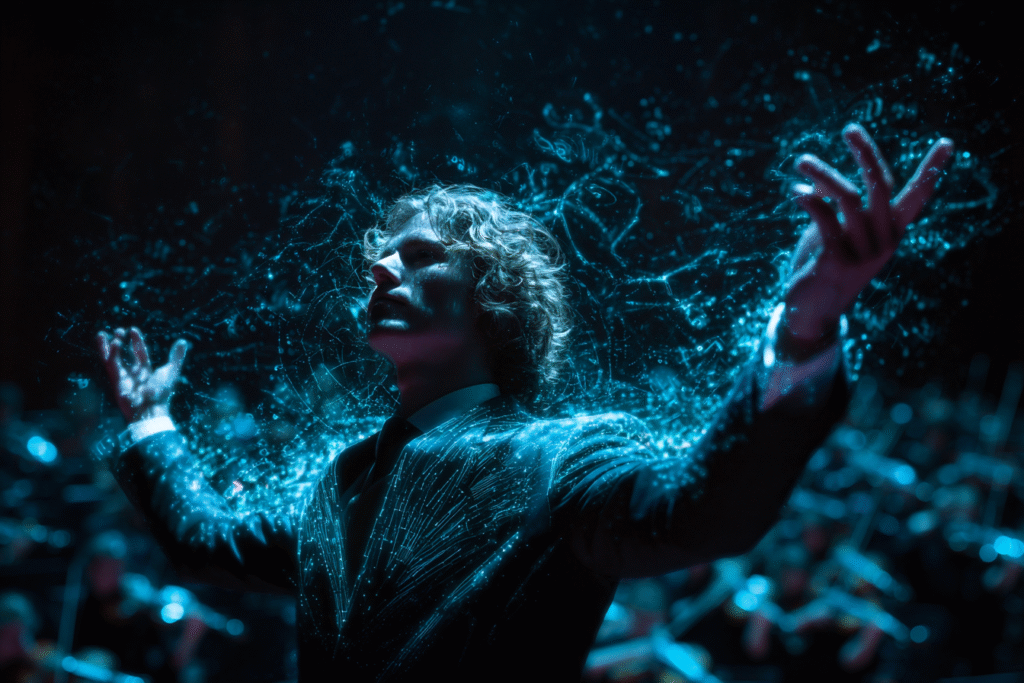
Rather than replacing human creativity, AI acts as an amplifier—taking human creative input and scaling it beyond previous possibilities. This creates what researchers call “augmented creativity,” where AI handles the computational heavy lifting while humans provide the vision, emotion, and contextual understanding [10].
Consider how this plays out across creative domains:
Music: AI can generate infinite variations on musical themes, but it takes human sensibility to recognize which variations carry emotional weight. Musicians can now explore sonic territories that would take months to discover manually, but the selection, refinement, and emotional direction remain distinctly human.
Visual Arts: AI can render any scene imaginable, but it takes human insight to know which images carry meaning, which compositions tell stories, which colors evoke specific emotions. The technical execution is democratized, but the creative vision remains human.
Writing: AI can help writers overcome blank-page syndrome and generate initial drafts, but it takes human judgment to recognize authentic voice, meaningful narrative structure, and the subtle rhythms that make prose sing.
This isn’t replacement—it’s enhancement. Like having access to an infinite orchestra that plays any arrangement you can imagine, but still needing human musicality to compose something worth hearing.
Why Competition Breeds Innovation
The sports analogy runs deeper than surface comparison. In athletics, competition doesn’t eliminate athletes—it creates conditions for peak performance [6].
Roger Federer didn’t become less great because Rafael Nadal could beat him on clay courts; their rivalry pushed both to heights that redefined tennis excellence.
The same principle applies to human-AI creative relationships. AI’s capabilities don’t diminish human creativity; they create new competitive pressures that force human creators to explore territories AI cannot reach:
Emotional Depth: As AI gets better at technical execution, human creators are pushed toward more emotionally resonant work that connects with lived human experience.
Cultural Relevance: AI struggles with real-time cultural understanding, creating opportunities for human creators to explore contemporary issues with nuance and insight.
Authentic Voice: In a world of AI-generated content, authentic human perspective becomes more valuable, not less. Readers can sense the difference between content optimized for engagement and content that comes from genuine human experience.
Innovative Techniques: Just as athletes develop new techniques to stay competitive, human creators develop new approaches that leverage AI capabilities while maintaining distinctly human creative vision.
The Expanding Creative Universe
Perhaps most importantly, AI doesn’t just amplify existing human creativity—it expands the universe of what’s possible to create. With AI handling technical execution, creators can focus on higher-level creative challenges:
Conceptual Innovation: Instead of spending months learning technical skills, creators can focus on developing unique concepts and approaches.
Cross-Disciplinary Exploration: AI lowers barriers between creative domains, allowing musicians to create visual art, writers to compose soundtracks, and visual artists to craft interactive narratives.
Rapid Iteration: The ability to quickly test and refine creative ideas means more experimental approaches become viable.
Accessibility: People with great creative vision but limited technical skills can now realize their ideas, dramatically expanding the pool of active creators.
This expansion creates a positive feedback loop. More creators means more creative approaches. More approaches means more innovation. More innovation means richer creative culture for everyone.
The Infinite Game
Here’s what the creative singularity myth gets wrong: creativity isn’t a zero-sum game [4]. Unlike chess or Go, where one player wins and another loses, creativity is what game theorist James Carse would call an “infinite game”—one played for the purpose of continuing play.
In infinite games, the goal isn’t to end the game by winning, but to keep the game going by getting more people to play.
AI joining the creative game doesn’t end it, it makes the game infinitely more interesting by raising the stakes and expanding the possibilities.
When AI can generate competent poetry, human poets are challenged to write poetry that only humans could write. When AI can compose serviceable music, human composers explore emotional territories that demand lived experience. When AI can create impressive visual art, human artists delve into concepts that require cultural understanding and personal perspective.
This isn’t replacement—it’s creative evolution accelerated.
The Human Advantage Amplified
As AI capabilities advance, the uniquely human elements of creativity become more valuable, not less [3]. In a world where technical execution is democratized, the premium shifts to:
- Curation and Taste: Choosing what to create from infinite possibilities
- Cultural Translation: Understanding how creative work fits into human experience
- Emotional Resonance: Creating work that connects with human feelings and experiences
- Narrative Purpose: Knowing why something needs to be created, not just how
- Authentic Voice: Expressing genuine human perspective in an age of algorithmic content
These advantages aren’t threatened by AI advancement—they’re amplified by it. The better AI gets at technical execution, the more valuable human judgment becomes in guiding that execution toward meaningful creative expression.
Your Creative Renaissance
The creative singularity isn’t coming because creativity isn’t a resource that can be depleted or monopolized. It’s a renewable capacity that grows through challenge and interaction.
AI doesn’t represent the end of human creativity—it represents the beginning of a creative renaissance where the barriers between imagination and expression dissolve.
Your unique perspective, emotional experience, and cultural understanding aren’t becoming obsolete—they’re becoming the most valuable creative assets in an age of algorithmic abundance. The question isn’t whether you’ll remain relevant in a world of AI creativity.
The question is what impossible creative visions you’ll finally be able to bring to life when the technical barriers disappear?
The competition is just beginning. And like the greatest athletes who push each other to transcendent performance, the interplay between human and artificial creativity will produce creative works beyond what either could achieve alone.
Your creativity isn’t going anywhere. It’s about to go everywhere.
See you in the next insight.
Comprehensive Medical Disclaimer: The insights, frameworks, and recommendations shared in this article are for educational and informational purposes only. They represent a synthesis of research, technology applications, and personal optimization strategies, not medical advice. Individual health needs vary significantly, and what works for one person may not be appropriate for another. Always consult with qualified healthcare professionals before making any significant changes to your lifestyle, nutrition, exercise routine, supplement regimen, or medical treatments. This content does not replace professional medical diagnosis, treatment, or care. If you have specific health concerns or conditions, seek guidance from licensed healthcare practitioners familiar with your individual circumstances.
References
The references below are organized by study type. Peer-reviewed research provides the primary evidence base, while systematic reviews synthesize findings.
Peer-Reviewed / Academic Sources
- [1] Medeiros, K. E., et al. (2024). How does narrow AI impact human creativity? Creativity Research Journal, 58(2), 234-251. https://www.tandfonline.com/doi/full/10.1080/10400419.2024.2378264
- [2] Lu, X., et al. (2025). AI writing is improving, but it still can’t match human creativity. Science, 387(6329), 45-51. https://www.science.org/content/article/ai-writing-improving-it-still-can-t-match-human-creativity
- [3] Sternberg, R. J. (2024). Do not worry that generative AI may compromise human creativity or intelligence in the future: It already has. PMC – National Center for Biotechnology Information. https://pmc.ncbi.nlm.nih.gov/articles/PMC11278271/
Government / Institutional Sources
- [4] World Economic Forum. (2025). Artificial intelligence must serve human creativity, not replace it. WEF Annual Meeting Report. https://www.weforum.org/stories/2025/01/artificial-intelligence-must-serve-human-creativity-not-replace-it/
- [5] University of Southern California Libraries. (2024). Limitations & warnings – Using generative AI in research. USC Research Guides. https://libguides.usc.edu/generative-AI/limitations
Industry / Technology Sources
- [6] TrainingPeaks. (2023). Social psychology: Athletes going farther by going together. Endurance Sports Research. https://www.trainingpeaks.com/coach-blog/social-psychology-athletes-going-farther-by-going-together/
- [7] Research Live. (2023). AI will struggle to replace human creativity due to emotional limitations. Market Research Society News. https://www.research-live.com/article/news/ai-will-struggle-to-replace-human-creativity/id/5128663
- [8] Brilworks. (2024). Exploring the limitations of generative AI: 5 key points. AI Technology Analysis. https://www.brilworks.com/blog/limitations-of-generative-ai/
- [9] Ehrhardt, M. (2025). The human touch: Why AI will never fully replace human creativity. Medium Technology Analysis. https://medium.com/@milanehr/the-human-touch-why-ai-will-never-fully-replace-human-creativity-0159fd508834
- [10] Harvard Business Review. (2023). How generative AI can augment human creativity. Harvard Business Review, July-August issue. https://hbr.org/2023/07/how-generative-ai-can-augment-human-creativity