Your consciousness doesn’t end when you stop breathing, it persists in every line of code you wrote, every object you made, every pattern you established.
Note: This article is for educational and informational purposes only. See full disclaimer at the end.
The archive sits in temperature-controlled storage: your grandmother’s handwritten recipes, your grandfather’s war medals, the family Bible with births and deaths recorded in fading ink. Physical artifacts that connect generations, proof someone was here.
Now consider your other archive: 47,000 emails, 12 years of photos in the cloud, your GitHub repositories, that YouTube channel you started during lockdown, the articles you wrote that people still find and share. Digital traces scattered across servers worldwide, consciousness frozen in binary.
Which legacy is more “real”? Which will last longer? And—the question that should haunt us—which captures more of who you actually were?
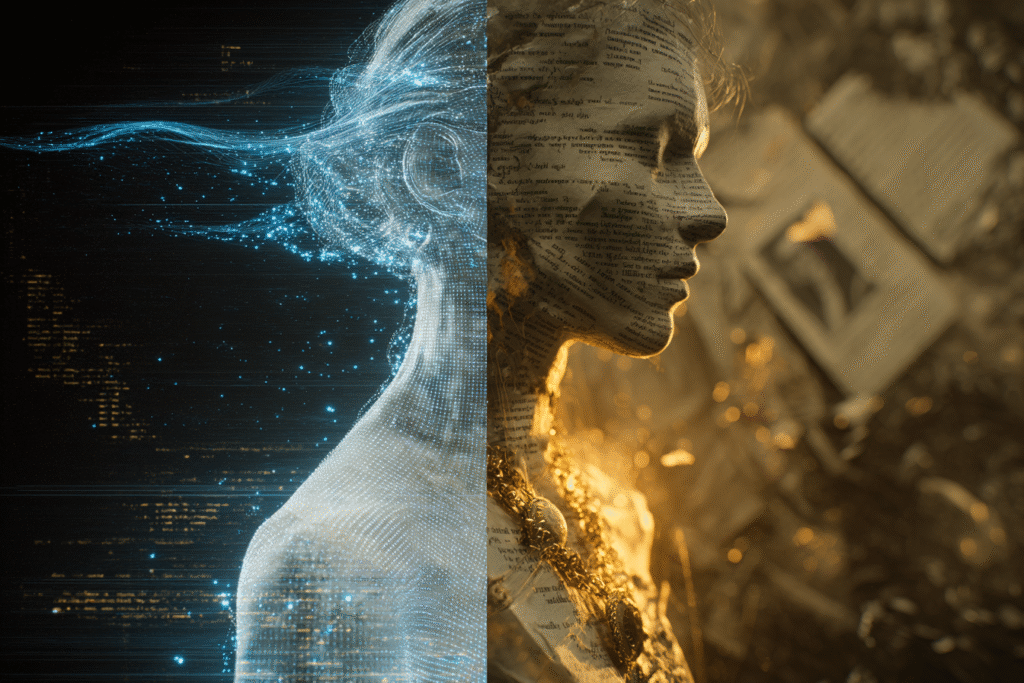
We stand at a strange threshold where consciousness can persist across both realms, where the distinction between “digital” and “physical” increasingly matters less than the question of impact. Your great-grandchildren might never hold anything you touched, but they could read your thoughts, hear your voice, even interact with an AI trained on your writing. The technology already exists [1].
The question isn’t capability—it’s consciousness. What part of yourself do you want to persist, and why?

The Immortality Paradox
Digital immortality sounds like science fiction until you realize it’s already here, just unevenly distributed. The Human Connectome Project maps neural pathways, companies offer cryonic preservation of brains for future scanning, and AI chatbots learn to speak like deceased loved ones. We’re not uploading full consciousness yet—that’s still decades or centuries away [2]—but we’re creating something perhaps more interesting: consciousness approximations that persist indefinitely.
The deeper question isn’t technical, it’s philosophical: If a digital version of your consciousness is created, does it truly continue “you,” or is it simply a program mimicking your behavior [4]? Most people intuitively understand the difference. The simulation isn’t you. But it might be something valuable anyway—a pattern of your consciousness that others can interact with, learn from, find comfort in.
Consider what’s already happening: AI-powered “legacy bots” that continue interacting with loved ones after death, using years of messages and writing to approximate how someone would respond [6]. Services like Echo help people curate their digital lives while living, deciding what fragments—photos, messages, writings—become their lasting presence [5]. This isn’t speculative. This is happening now.
Yet something feels incomplete about purely digital persistence. Your consciousness might live in cloud servers, but what about the physical world you inhabited? The objects you made with your hands, the spaces you transformed, the tangible marks of your existence?
What Lasts in the Physical World
Walk through any museum and you’re surrounded by consciousness made tangible. A 2,500-year-old ceramic vessel wasn’t just functional—it was someone’s aesthetic choice, their careful hands shaping clay, their personal mark on material reality [3]. The object outlasted empires. It outlasted the very memory of who created it. But consciousness persists in its curves, its purpose, its existence.
This matters more than we typically acknowledge. Physical artifacts connect us across time in ways digital never quite can. When you hold your grandmother’s wedding ring, you’re touching the same metal she touched, occupying the same physical space in the universe. There’s no simulation, no approximation. It’s actual continuity.
Family businesses understand this instinctively. They use artifacts—the framed first dollar earned, the location of pivotal meetings, cherished objects that signify relational experiences—to transmit values across generations [8]. These aren’t just symbols. They’re consciousness made permanent through physical presence.
The most interesting legacy creators work in both realms simultaneously. The Future Relics project had people vote on objects that define our era—mobile phone, car, computer—then 3D-printed them in handmade ceramic, creating artifacts that would last millennia [7]. Digital technology creating physical permanence, contemporary consciousness preserved for archaeological discovery a thousand years hence.
This is the integration point: using each medium for what it does best.
The YouTube Problem
Consider content creators who’ve built audiences of millions. They produce videos that reach more people in a week than Aristotle influenced in a lifetime. Their consciousness—their thoughts, perspectives, ways of seeing—spreads through the digital ecosystem like mycelium through soil.
Yet the platforms themselves are fragile. Remember Vine? Six-second videos that defined a cultural moment, then vanished when the company shut down. Remember MySpace? Millions of profiles, connections, creative expressions—largely lost. The digital realm promises immortality but delivers impermanence.
Smart creators understand this. They diversify across platforms, maintain email lists that provide “direct access to subscribers, making it a hedge against algorithm shifts” [9]. They recognize that while attention might come from social platforms, legacy requires owning your audience relationship.
The most sophisticated go further: they understand that digital legacy encompasses “the lasting impact of your online presence”—not just content, but “the conversations you spark, the communities you build, and the change you inspire” [10]. Platform independence. Values alignment. Impact that transcends viral moments.
This is consciousness thinking beyond its container, planning for persistence despite platform fragility.
The Open Source Revelation
Then there’s the most counterintuitive legacy strategy: giving everything away.
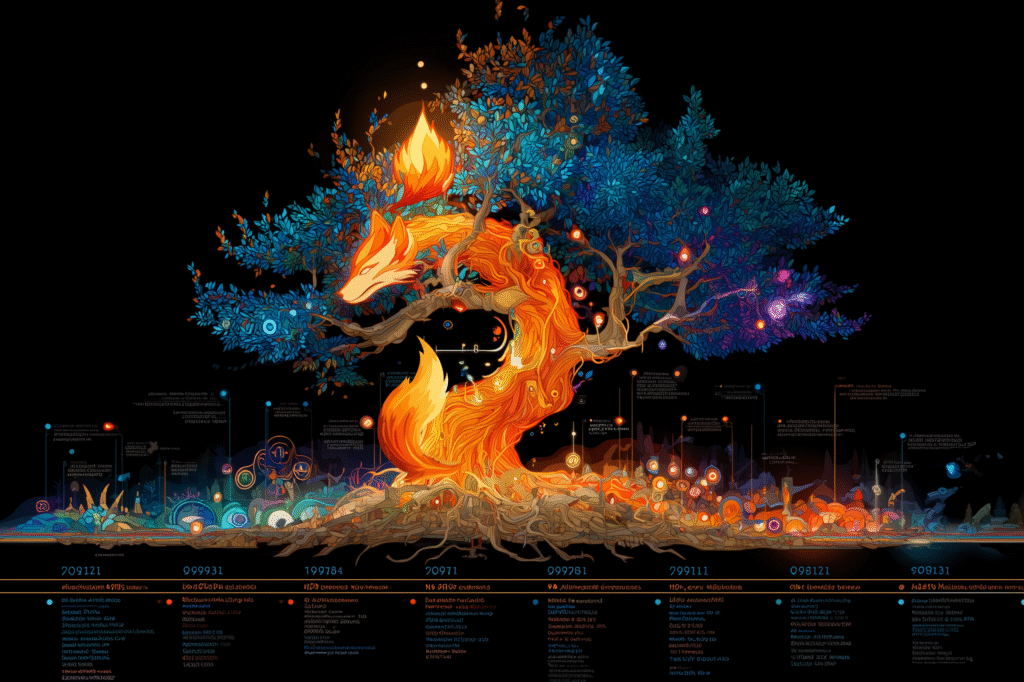
Mozilla’s open-source principles have created lasting impact for over 25 years, “exceeding individual product success” [11]. By making Firefox’s code freely available, by establishing frameworks for community contribution, Mozilla created something larger than any single company could build. The legacy persists not through control, but through liberation.
This reveals something profound about consciousness and legacy: sometimes the best way to preserve your unique patterns is to release them into the world, letting others build on, modify, and extend what you created. Your consciousness becomes part of collective consciousness, your insights woven into the fabric of what comes after.
Linux. Wikipedia. The entire open-source movement. These represent consciousness deliberately choosing collective immortality over individual ownership. The creators are often forgotten—quick, who wrote the first Linux kernel networking stack?—but their consciousness persists in the code, the principles, the collaborative patterns they established.
For knowledge workers, creators, and thinkers, this suggests a different approach to legacy: create frameworks others can use, insights others can build on, systems that generate ongoing value beyond your participation. Your consciousness multiplies through adoption rather than attribution.
The Integration Protocol
So how do you actually build legacy across both digital and physical realms? Not a framework—just observed patterns from those who’ve done it well:
In the physical realm: Create objects with intention. Not mass-produced items, but things made by your hands or designed by your consciousness. A piece of furniture you built. A garden you planted. Photographs you printed and framed. Objects that carry your aesthetic choices, your personal mark. These become artifacts of your consciousness for those who come after.
In the digital realm: Build platforms, not just presence. Your own domain, your own email list, your own archive that you control. The platforms will change, but your owned infrastructure persists. Curate deliberately—not everything deserves permanence, but some things do. Make those choices consciously [5].
At the intersection: Use digital tools to create physical permanence. Use physical objects to anchor digital meaning. The integration matters more than either realm alone. Your writing collected in bound books. Your code creating tangible change. Your digital photography printed at meaningful moments. Consciousness persisting across mediums.
Through others: The most persistent legacy isn’t what you create, but what you enable others to create. Mentorship that shapes how someone approaches their work. Teaching that shifts how someone sees the world. Frameworks others build upon. Your consciousness multiplying through influence rather than output.
With intention: None of this happens accidentally. Legacy requires deliberate choice about what matters, what persists, what serves future generations. You’re not trying to preserve everything—you’re making conscious decisions about which patterns of yourself warrant immortality.
The Future You're Creating
Here’s the truth about legacy in the age of AI and digital consciousness: you’re creating it right now, whether you intend to or not. Every email, every project, every choice leaves traces. The question isn’t whether you’ll leave a legacy, but whether it will be conscious or accidental.
Your digital footprint already outlives most civilizations’ physical monuments. Future anthropologists will have more data about your daily life than we have about pharaohs. The difference is whether you’re shaping that archive deliberately or letting it accumulate by default.
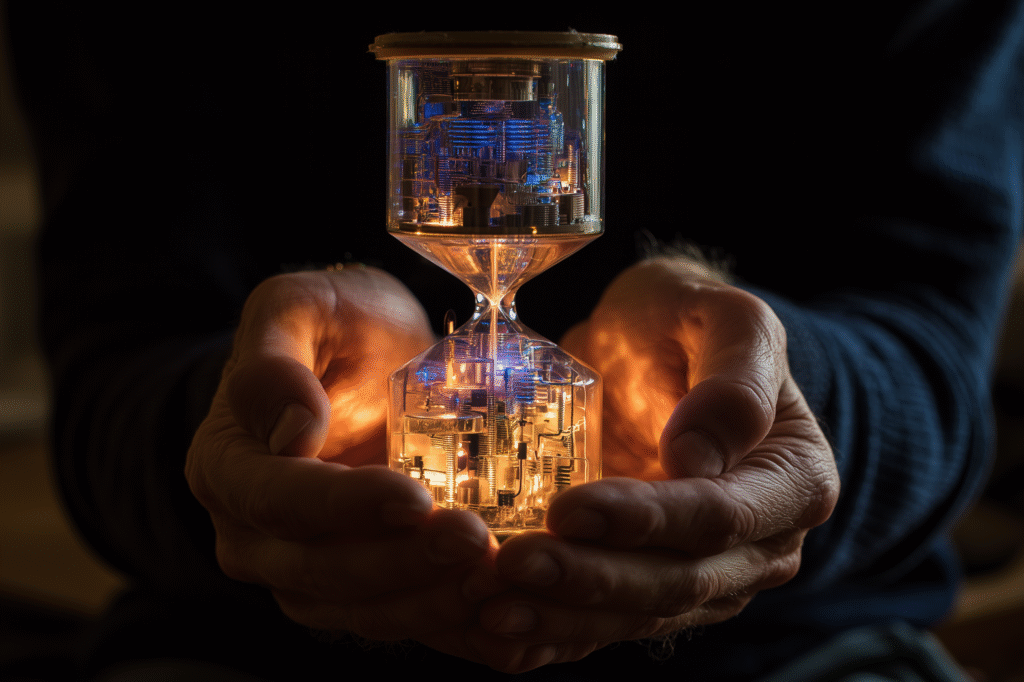
Your physical creations—the objects you make, the spaces you transform, the tangible marks of your existence—might last longer than any server. Stone, ceramic, metal, wood: these materials outlive companies, platforms, often entire technological paradigms. What you make with intention persists.
The integration of both realms creates something neither can achieve alone: consciousness that persists across time, accessible through multiple mediums, resistant to the fragility of any single format.
But legacy isn’t just about persistence. It’s about impact. The consciousness you share freely often spreads further than the consciousness you try to control. The frameworks you give away get built upon. The insights you release multiply through adoption. The values you model get transmitted across generations.
You’re not building a monument. You’re encoding patterns of consciousness into both digital and physical reality, creating multiple paths for your unique perspective to continue influencing the world after your biological existence ends.
The question isn’t capability—the technology exists, the materials endure. The question is intention: what part of your consciousness deserves to persist, and why? What will you create with your hands? What will you encode in digital permanence? What will you give away freely?
Your legacy is being written in both realms simultaneously. Time to write it consciously.
See you in the next insight.
Comprehensive Medical Disclaimer: The insights, frameworks, and recommendations shared in this article are for educational and informational purposes only. They represent a synthesis of research, technology applications, and personal optimization strategies, not medical advice. Individual health needs vary significantly, and what works for one person may not be appropriate for another. Always consult with qualified healthcare professionals before making any significant changes to your lifestyle, nutrition, exercise routine, supplement regimen, or medical treatments. This content does not replace professional medical diagnosis, treatment, or care. If you have specific health concerns or conditions, seek guidance from licensed healthcare practitioners familiar with your individual circumstances.
References
The references below are organized by study type. Peer-reviewed research provides the primary evidence base, while systematic reviews synthesize findings.
Peer-Reviewed / Academic Sources
- [1] Proceedings of the 2025 CHI Conference on Human Factors in Computing Systems. (2025). “AI Afterlife” as Digital Legacy: Perceptions, Expectations, and Concerns. ACM. https://dl.acm.org/doi/10.1145/3706598.3713933
Government / Institutional Sources
- [2] Wikipedia. (2025). Mind uploading. Wikimedia Foundation. https://en.wikipedia.org/wiki/Mind_uploading
- [3] Wikipedia. (2025). Artifact (archaeology). Wikimedia Foundation. https://en.wikipedia.org/wiki/Artifact_(archaeology)
Industry / Technology Sources
- [4] Siddiqa, A. (2024). The Ethics and Implications of Digital Immortality: Preserving Human Consciousness in the Age of AI. Medium. https://medium.com/@ayesha.siddiqa2197/the-ethics-and-implications-of-digital-immortality-preserving-human-consciousness-in-the-age-of-ai-dc05adcc7807
- [5] Master Digital Design. Digital Legacy: Echo, Soul Story, and Everglow Projects. https://www.masterdigitaldesign.com/case/digital-legacy
- [6] Vocal Media. The Digital Afterlife: Can Technology Make Us Immortal? https://vocal.media/futurism/the-digital-afterlife-can-technology-make-us-immortal
- [7] Google Arts & Culture. (2018). Future Relics: Creating the Archaeological Artifacts of the Future. Chhatrapati Shivaji Maharaj Vastu Sangrahalaya. https://artsandculture.google.com/story/future-relics-creating-the-archaeological-artifacts-of-the-future-chhatrapati-shivaji-maharaj-vastu-sangrahalaya/ewUB7TQ6qRk0LQ?hl=en
- [8] Kellogg Insight. (2025). How “Artifacts” Can Help a Family Business Define Its Legacy. Northwestern University. https://insight.kellogg.northwestern.edu/article/artifacts-family-business-legacy
- [9] MarTech. (2025). How digital natives changed the game on legacy media. https://martech.org/how-digital-natives-changed-the-game-on-legacy-media/
- [10] Join the Glow. Beyond the Algorithm: How to Build a Digital Legacy That Lasts. https://jointheglow.com/beyond-the-algorithm-building-a-digital-legacy-that-matters/
- [11] Legacy Beyond Profits. Open source legacy. https://legacybeyondprofits.com/p/open-source-legacy