Your work exists. You don’t need to.
Note: This article is for educational and informational purposes only. See full disclaimer at the end.
Creating without ego in an age where personal branding is as essential as oxygen.
This paradox sits at the heart of creation in 2025, where personal branding has become as essential as oxygen and every creative act seems to demand a face, a story, a carefully curated identity attached to it.
Yet some of the most influential works of our time emerged from shadows, created by people who chose invisibility over influence, impact over identity.

The Architecture of Anonymous Power
In 2009, someone calling themselves Satoshi Nakamoto released Bitcoin into the world. They participated in development until December 2010, then vanished completely, leaving behind approximately 1.1 million bitcoins—worth billions today—untouched in a wallet that hasn’t moved since [6].
This wasn’t just a disappearing act; it was an architectural decision. By remaining anonymous, Nakamoto ensured that Bitcoin could never be hijacked by a single authority, that no one could take credit for its success or be targeted for its disruption [7].
The decision wasn’t about privacy alone. As one Bitcoin researcher notes, Nakamoto’s anonymity meant that “Bitcoin is not dependent on a single individual or centralized authority. The success of Bitcoin is tied to the collective efforts of the community, not to a person” [7].
In an age where founders become celebrities and companies become cults of personality, Nakamoto’s absence created something more powerful than presence ever could: a truly decentralized system that belongs to no one and everyone simultaneously.
The Million Anonymous Architects
While we obsess over Nakamoto’s identity, approximately 350,000 unique IP addresses edit Wikipedia every month, contributing roughly one-third of all edits to the English version [8]. These anonymous editors make similar quality edits to registered users, and surprisingly, a 2009 Dartmouth study found that anonymous editors were “some of Wikipedia’s most productive contributors of valid content” [9].
The numbers tell a story we rarely hear: anonymous Wikipedia editors contribute about 900,000 edits monthly to the English version alone [8]. When researchers studied these contributions through Tor (the anonymity network), they found that anonymous users made higher-quality changes to articles than non-logged-in IP editors, particularly on controversial topics like politics, technology, and religion [3].
Yet these contributors face constant pressure to reveal themselves. Wikipedia editors who maintain anonymity report receiving “threats of rape, physical assault, and death as reprisals for their contributions to the project” [4]. One participant in a study revealed: “I don’t want to get flak when I’m applying to medical schools… I avoid writing about sexual health… I had my giant obstetrics textbook right open next to me—but I just didn’t want to wade in because I don’t need backlash” [4].

The Street Artist Who Became a Movement
Banksy has maintained anonymity for over 25 years while becoming one of the world’s most influential artists [10].
Working in secrecy, often disguised as a construction worker, creating stenciled works that appear overnight on walls from Bristol to Bethlehem, Banksy demonstrates that impact doesn’t require identity. Steve Lazarides, Banksy’s former agent who traveled the world with him, explained why he’ll never reveal the artist’s identity: “If I revealed his face, it’s like telling a five-year-old that Santa Claus isn’t real. Why would I do that? The general public have constructed a folk hero, and I’m not going to take that away from them” [11].
The anonymity isn’t just practical—avoiding arrest for vandalism—it’s philosophical. By removing the artist from the art, Banksy forces viewers to confront the message rather than the messenger [12].
An anonymous persona, as one analyst notes, “fulfills various functions” beyond mere protection from prosecution. It shifts focus from personality to purpose, from creator to creation.
The Author Who Refused to Exist
Elena Ferrante, whose Neapolitan Novels have sold 15 million copies worldwide and been translated into 45 languages, has maintained complete anonymity since her 1992 debut [13].
Despite becoming one of Time magazine’s 100 most influential people in 2016, she refuses all publicity, conducting interviews only in writing. Her reasoning cuts to the heart of creative liberation: “Once I knew that the completed book would make its way in the world without me, once I knew that nothing of the concrete, physical me would ever appear beside the volume—as if the book were a little dog and I were its master—it made me see something new about writing” [14].
When an Italian journalist attempted to expose her identity in 2016 using financial records, the literary world erupted in protest. Writer Jeanette Winterson called it “malicious and sexist,” noting the “obsessional outrage at the success of a writer—female—who decided to write, publish and promote her books on her own terms” [14].
Ferrante herself has explained that anonymity isn’t incidental to her work—it’s essential: allowing her to pull “all that is alive out from the depths of experience… including what I myself have pushed furthest away because it seemed unbearable” [5].
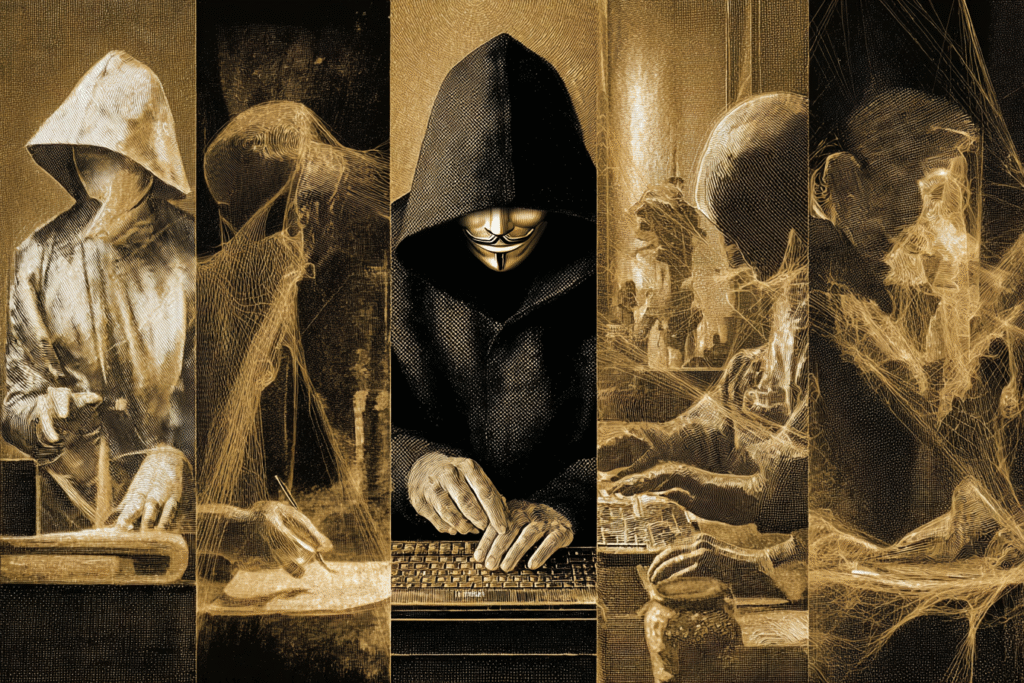
The Psychology of Ego Dissolution
When we create without attachment to identity, something profound happens.
Psychologists studying ego dissolution—the temporary loss of subjective self-identity—have found it correlates with enhanced creativity and psychological flexibility [1]. As psychologist Dr. Nicole LePera explains, “Your ego is a very rigid identity… Anything outside of confirmed thoughts, beliefs, and behaviors will be rejected” [15].
The creative process itself demands ego dissolution. Mihaly Csikszentmihalyi, who researched flow states for decades, describes it as being “completely involved in an activity for its own sake. The ego falls away. Time flies. Every action, movement, and thought follows inevitably from the previous one” [15].
This isn’t just about feeling good—it’s about accessing deeper creative capabilities. When we stop thinking about who gets credit, we start thinking about what gets created.
Vincent van Gogh exemplified this principle before we had words for it. Despite facing rejection and lack of recognition during his lifetime—selling only a single painting—he remained dedicated to his art. He painted because he loved to paint, not because he sought validation [16]. His ability to detach from outcome allowed him to explore his unique style and create works that would later become some of the most celebrated pieces in art history.
The Platforms of Liberation
The infrastructure for ego-free creation has never been more robust.
Reddit users create “throwaway accounts” specifically for anonymous interaction, separating sensitive posts from their main identities [17]. These accounts allow people to share personal struggles, ask difficult questions, or explore controversial topics without fear of judgment affecting their primary online presence. Approximately one-third of Reddit content comes from these anonymous or throwaway accounts, enabling honest dialogue about mental health, addiction, trauma, and other sensitive topics [2].
On 4chan, complete anonymity is the default. Users post without accounts, identified only by temporary numbers that reset with each thread [18]. While this creates chaos, it also creates something else: pure, unfiltered creativity unconstrained by reputation or recognition. As one researcher notes, the platform’s “lack of data retention” means “the site has no memory,” forcing content to survive on merit alone rather than the creator’s reputation [18].
Open source software development thrives on similar principles. The Linux kernel, one of the most successful collaborative projects in history, has received contributions from over 13,500 developers from more than 1,300 companies since 2005 [19]. Many contribute pseudonymously or through corporate accounts that obscure individual identity. As Linux Foundation director Jim Zemlin notes, success requires “humility… We must lead through influence… If you can check your ego and take criticism, open source actually turns out to be a really fun community to work with” [20].

The Benefits They Don't Tell You About
Those who create without ego report profound psychological benefits. Studies on anonymous creativity reveal several consistent patterns:
Liberation from perfectionism: When your name isn’t attached, you’re free to experiment, fail, and iterate without reputation risk. The work becomes about exploration rather than exhibition [15].
Enhanced authenticity: Paradoxically, anonymity often leads to greater honesty. Without the pressure to maintain a consistent public persona, creators can explore the full range of their thoughts and experiences [16].
Focus on process over product: When external validation isn’t possible, internal motivation becomes primary. Creators report finding joy in the act of creation itself rather than its reception [1].
Reduced anxiety: The pressure to maintain a creative identity—to be consistently brilliant, relevant, innovative—disappears. One artist described it: “The freedom to be mediocre is actually the freedom to occasionally be great” [15].
Deeper connection: By removing ego from the equation, creators often report feeling more connected to their audience and collaborators. The work becomes about serving the collective rather than building individual reputation [16].
The Strategies for Letting Go
Creating without ego doesn’t mean creating without intention. Those who’ve successfully navigated anonymous creation offer practical strategies:
Separate creation from creator: Use pseudonyms, anonymous accounts, or contribute to collective projects where individual credit is impossible to track. This physical separation makes psychological separation easier [17].
Time-delay publication: Create work and release it weeks or months later, allowing emotional attachment to fade. By the time it enters the world, you’ve moved on to new projects.
Collaborative dissolution: Work in groups where individual contributions blur together. When everyone owns the work, no one needs to.
Purpose over personality: Focus on what the work does rather than what it says about you. Ask: “Does this serve its purpose?” rather than “Does this reflect well on me?”
Practice productive anonymity: Start small. Contribute to Wikipedia. Submit anonymous feedback. Create throwaway accounts for honest discussions. Build the muscle of egoless contribution.
The Tools of Anonymous Creation
Modern technology offers unprecedented opportunities for ego-free creation:
Tor Browser and VPNs: Mask your digital footprint, allowing truly anonymous online activity [3].
Cryptocurrency wallets: Enable anonymous financial transactions for selling work or receiving donations without revealing identity.
Disposable email services: TempMail, Guerrilla Mail, and similar services provide temporary addresses for account creation [17].
Anonymous publishing platforms: From 4chan to anonymous Medium posts, numerous platforms allow content creation without identity [18].
Blockchain systems: Emerging “verifiable anonymity” systems allow creators to prove credentials without revealing identity—demonstrating expertise while maintaining privacy.
AI collaboration tools: Generative AI can serve as an anonymous creative partner, allowing you to manifest ideas without personal attribution. The AI doesn’t care who gets credit.
The Paradox of Recognition Without Identity
Here’s what they discovered about anonymous success: it’s not about avoiding recognition—it’s about letting the work earn it. Banksy’s art sells for millions. Ferrante’s books top bestseller lists. Bitcoin has a market cap in the trillions. The work becomes more powerful precisely because it stands alone, judged purely on merit rather than maker.
This challenges everything we’ve been taught about creative careers. We’re told to build our brand, grow our following, become the product. But what if the opposite were true? What if removing ourselves from the equation actually amplified our impact?
Marina Abramović warned that “the moment we begin to believe in our own greatness, we kill our ability to be truly creative” [15]. Ryan Holiday observes that “while the history books are filled with tales of obsessive visionary geniuses who remade the world in their image with sheer, almost irrational force, history is also made by individuals who fought their egos at every turn, who eschewed the spotlight, and who put their higher goals above their desire for recognition” [16].
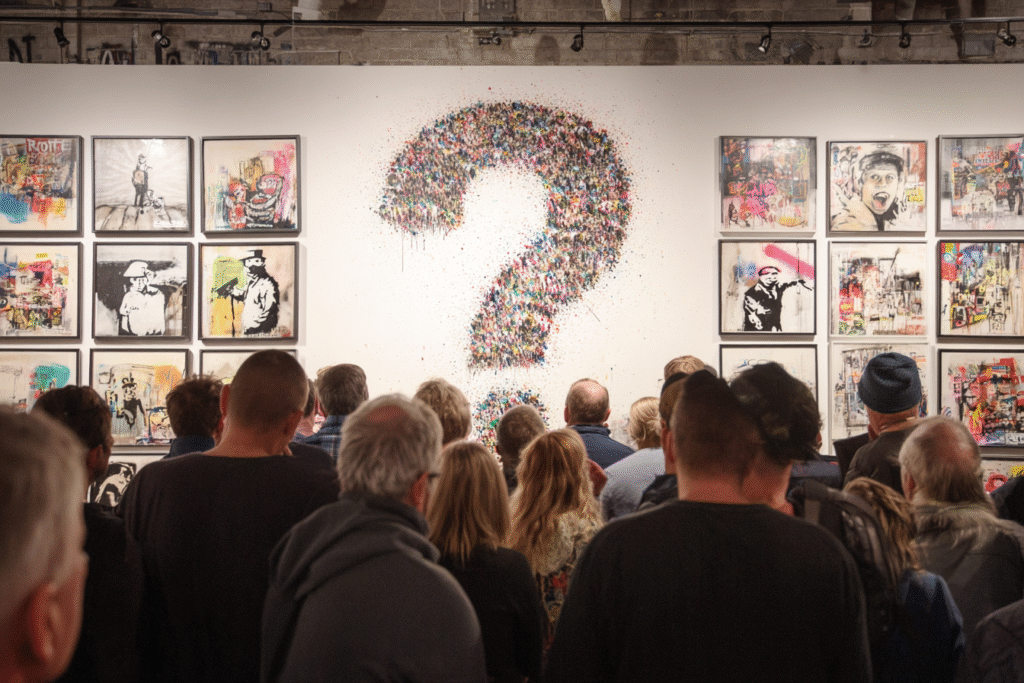
The Liberation in Practice
Consider the software developer who maintains critical open source infrastructure used by millions but is known only by a GitHub username. The Wikipedia editor who’s written thousands of articles but never created an account. The street artist whose work appears overnight and transforms neighborhoods without a signature. The anonymous donor whose contributions change lives without seeking naming rights.
These aren’t acts of false modesty or missed opportunities. They’re expressions of a different kind of power—the power to impact without identity, to create without credit, to contribute without claiming.
In our attention economy, where consciousness itself has become currency (as we explored in our previous insight), choosing anonymity is almost revolutionary. It’s a refusal to participate in the identity marketplace, a declaration that the work matters more than the worker, that impact transcends individual recognition.
The AI Amplification of Ego-Free Creation
Artificial intelligence introduces a new dimension to anonymous creation. When you collaborate with AI, who owns the output? The prompter? The model creator? The training data contributors? This ambiguity creates an opportunity: AI can become a shield for ego-free creation, a way to manifest ideas without clear authorship.
Artists are already using AI to create works they’d never attempt under their own names—exploring styles, topics, and perspectives freed from the constraints of their established identities.
The AI becomes a creative proxy, allowing experimentation without reputation risk.
But there’s a deeper transformation happening. As one researcher notes, anonymity in the age of AI isn’t just about hiding identity—it’s about dissolving the very concept of individual authorship. When creation becomes truly collaborative between human and machine, ego becomes not just unnecessary but impossible to maintain.

The Resistance and the Rewards
Not everyone celebrates anonymous creation. Publishers want marketable authors. Galleries want promotable artists. The entire creative economy is built on personality as product. When Ferrante was considered for Italy’s prestigious Strega Prize, there were protests about her anonymity, “as if she might be stealing the prize if she were to win” [5].
Yet the resistance reveals the radical nature of ego-free creation. It threatens the fundamental structure of how we assign value, distribute resources, and understand creativity itself. If anyone can create powerful work anonymously, what happens to the cult of creative genius? What happens to the marketing machine built on personal brands?
What happens is liberation. Liberation from the exhausting performance of creative identity. Liberation from the pressure to be consistently brilliant. Liberation from the fear that you’re only as good as your last work. Liberation to experiment, fail, evolve without public scrutiny.
Your Anonymous Future
The choice isn’t binary—total anonymity or complete exposure. Most creators will find their balance somewhere between Nakamoto’s complete disappearance and today’s mandatory self-promotion. But understanding that anonymity is an option, that ego isn’t essential, that creation can exist without creator—this knowledge itself is liberating.
Start small. Submit something anonymously this week. Contribute to a project where individual credit is impossible. Create something you’ll never sign. Feel what it’s like when the work stands alone, naked of your identity, judged purely on its merit.
Notice what changes. The anxiety about reception. The attachment to outcome. The need for validation. Watch them dissolve. In their place, something else emerges: the pure joy of creation, the satisfaction of contribution, the freedom of working without a net of identity.
Your ego tells you that you need recognition to matter. That your name on the work is what gives it value. That without credit, creation is pointless. But consider this: every atom in your body came from an anonymous star that died billions of years ago. That star’s name doesn’t matter. Its light still shines in you.
The same is true for your work. Long after your name is forgotten, the ripples of your anonymous contributions will continue spreading. The Wikipedia edit that helped someone understand. The open source code that solved someone’s problem. The anonymous donation that changed someone’s life. The art that appeared overnight and made someone think differently.
The Invitation
Sit with this question: What would you create if no one would ever know it was yours?
Not as a thought experiment, but as an actual practice. Because in the end, the choice isn’t between recognition and anonymity. It’s between creating from ego or creating from essence. Between building a reputation or building a better world. Between signing your name or signing nothing and letting the work sign itself.
The infrastructure exists. The tools are available. The examples surround us. All that remains is the choice: Will you create for credit, or will you create for creation itself?
Your work needs to exist. You don’t need to take credit for it. And in that gap between creation and creator, between work and worker, lies a freedom you may have forgotten was possible. The freedom to create without ego. The freedom to contribute without claiming. The freedom to matter without being known.
In an economy that demands your identity as payment for participation, choosing anonymity isn’t just creative choice—it’s creative resistance. It’s a declaration that your work stands on its own, that impact matters more than identity, that the gift matters more than the giver.
Create something this week that no one will ever trace back to you. Put something beautiful into the world with no signature attached. Experience the liberation of creating without ego. Discover what emerges when you remove yourself from the equation.
The work will survive. You might even thrive.
See you in the next insight.
Comprehensive Medical Disclaimer: The insights, frameworks, and recommendations shared in this article are for educational and informational purposes only. They represent a synthesis of research, technology applications, and personal optimization strategies, not medical advice. Individual health needs vary significantly, and what works for one person may not be appropriate for another. Always consult with qualified healthcare professionals before making any significant changes to your lifestyle, nutrition, exercise routine, supplement regimen, or medical treatments. This content does not replace professional medical diagnosis, treatment, or care. If you have specific health concerns or conditions, seek guidance from licensed healthcare practitioners familiar with your individual circumstances.
References
The references below are organized by study type. Peer-reviewed research provides the primary evidence base, while systematic reviews synthesize findings.
Peer-Reviewed / Academic Sources
- [1] Binghamton University, (2024). Research takes a closer look at the experience of ego dissolution. https://www.binghamton.edu/news/story/4673/closing-the-i-research-takes-a-closer-look-at-the-experience-of-ego-dissolution
- [2] arXiv, (2025). Throwaway Accounts and Moderation on Reddit. https://arxiv.org/html/2501.17430v1
Government / Institutional Sources
- [3] The Tor Project, (2020). The value of Tor and anonymous contributions to Wikipedia. https://blog.torproject.org/the-value-of-anonymous-contributions-wikipedia/
- [4] Drexel University, (2024). Just Give Me Some Privacy — Anonymous Wikipedia Editors and Tor Users Explain Why They Don’t Want You to Know Who They Are. https://drexel.edu/news/archive/2016/october/tor-wikipedia-privacy
- [5] Stanford Humanities Center, (2016). Elena Ferrante’s Real Identity? A Treasure to Protect, Up Until Yesterday. https://shc.stanford.edu/arcade/interventions/elena-ferrantes-real-identity-treasure-protect-until-yesterday
Industry / Technology Sources
- [6] Wikipedia, (2024). Satoshi Nakamoto. https://en.wikipedia.org/wiki/Satoshi_Nakamoto
- [7] Medium, (2024). Satoshi Nakamoto — The Anonymous Genius Behind Bitcoin’s Unbreakable Security. RocketMe Up Cybersecurity. https://medium.com/@RocketMeUpCybersecurity/satoshi-nakamoto-the-anonymous-genius-behind-bitcoins-unbreakable-security-1ba4d5240250
- [8] Wikimedia Diff, (2014). Inviting anonymous editors to join the Wikipedia community. https://diff.wikimedia.org/2014/05/16/anonymous-editor-acquisition/
- [9] Wikipedia, (2024). Reliability of Wikipedia. https://en.wikipedia.org/wiki/Reliability_of_Wikipedia
- [10] Wikipedia, (2025). Banksy. https://en.wikipedia.org/wiki/Banksy
- [11] Center for Art Law, (2025). The Real Banksy: Anonymity and Authenticity in the Art Market. https://itsartlaw.org/art-law/the-real-banksy-anonymity-and-authenticity-in-the-art-market/
- [12] MyArtBroker, (2024). Why Is Banksy Anonymous. https://www.myartbroker.com/artist-banksy/articles/why-is-banksy-anonymous
- [13] Options The Edge, (2024). Why Elena Ferrante will never reveal her identity. https://www.optionstheedge.com/topic/culture/why-elena-ferrante-author-behind-famed-neapolitan-novels-will-never-reveal-her
- [14] Wikipedia, (2025). Elena Ferrante. https://en.wikipedia.org/wiki/Elena_Ferrante
- [15] Creative Hackers, (2024). Why Ego Kills Creativity. https://www.creativehackers.co/posts/why-ego-kills-creativity
- [16] Medium, (2024). Detach to Thrive: Letting Go of Ego and Outcome in the Creative Process. Francois Coetzee. https://nlpwithpurpose.medium.com/detach-to-thrive-letting-go-of-ego-and-outcome-in-the-creative-process-ac6490fbd305
- [17] Hidemyacc, (2025). Throwaway Reddit account – How to create multiple accounts without being detected. https://hidemyacc.com/throwaway-reddit-account
- [18] Wikipedia, (2025). 4chan. https://en.wikipedia.org/wiki/4chan
- [19] Linux Foundation, (2024). Participating in Open Source Communities. https://www.linuxfoundation.org/resources/open-source-guides/participating-in-open-source-communities
- [20] Slashdot, (2024). Jim Zemlin, ‘Head Janitor of Open Source,’ Marks 20 Years At Linux Foundation. https://linux.slashdot.org/story/24/11/21/2022220/jim-zemlin-head-janitor-of-open-source-marks-20-years-at-linux-foundation