We’ve evolved from memorizing phone numbers to forgetting our own, and now we’re handing over our thinking too.
Note: This article is for educational and informational purposes only. See full disclaimer at the end.
When I was a child, I could easily recite dozens of phone numbers from memory. Today, I can barely remember my own without checking my phone.
This isn’t just about convenience—it’s about a fundamental shift in how human consciousness operates. And as we delegate more of our thinking to AI, we’re entering territory that makes the transition from oral to written culture look like a minor adjustment.
The ancient Greeks had a word for this fear. When Socrates warned that writing would destroy memory, he wasn’t entirely wrong—he just underestimated humanity’s ability to adapt. Writing didn’t destroy memory; it transformed it [8]. We stopped memorizing epic poems and started memorizing how to find information.
But what happens when we stop thinking critically altogether?
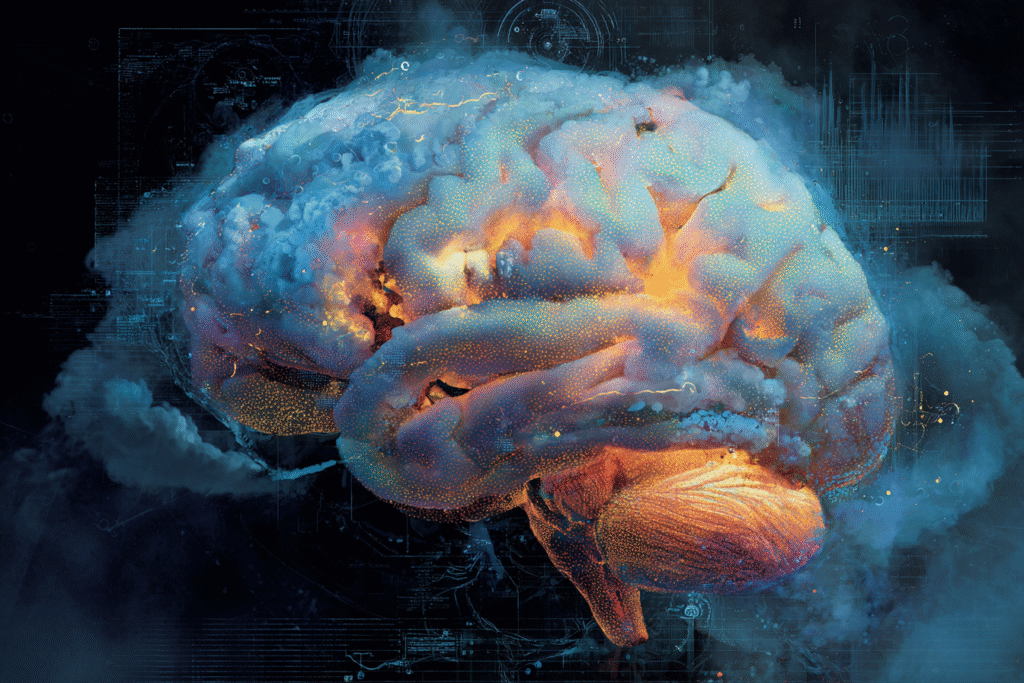
The Evolution of Cognitive Outsourcing
Every major leap in human technology has been, at its core, a form of cognitive outsourcing. Writing allowed us to store thoughts outside our minds. The printing press democratized that storage. Calculators took over arithmetic. The internet became our external memory bank. Each time, prophets of doom warned about the death of human capability. Each time, we adapted and evolved.
But AI represents something qualitatively different. Previous technologies augmented specific cognitive functions—memory, calculation, information retrieval. AI promises to augment judgment itself. When we delegate not just the storage of information but the synthesis of meaning, the formation of opinions, and the making of decisions, we cross a threshold that humanity has never crossed before.
Consider what happens in your brain when you write by hand versus when you type. Neuroscience research shows that handwriting activates far more elaborate brain connectivity patterns than typing, engaging regions crucial for memory formation and encoding new information [3]. Now extend this principle to thinking itself. What happens to those neural pathways when we consistently delegate complex reasoning to AI?
The Paradox of Enhanced Capability
Here’s the beautiful irony: AI makes us simultaneously more and less capable. A recent study found that students who relied on AI tools for essay writing showed the weakest brain connectivity patterns compared to those who used only their brains or traditional search engines [4]. The AI users struggled to accurately quote their own work and reported the lowest sense of ownership over their creations.
Yet these same students produced essays that were, by many metrics, superior. Their grammar was flawless. Their arguments were structured. Their sources were comprehensive. They had become more productive while becoming less engaged—a paradox that cuts to the heart of what it means to think.
This isn’t just about lazy students taking shortcuts. It’s about a fundamental shift in how human consciousness interacts with intelligence that isn’t its own. When AI can generate a perfectly reasonable response to almost any query, why struggle through the messy process of forming your own thoughts? The temptation isn’t just practical—it’s existential.

The Spectrum of Delegation
Not everyone relates to AI the same way. Through my observations and the emerging research, I see four distinct camps forming:
The Resisters refuse to engage with AI at all, viewing it as a threat to authentic human thought. They’re not necessarily wrong, but they’re fighting a battle that history suggests is already lost. Their children will grow up in a world where AI assistance is as natural as spell-check.
The Dabblers use AI like they use Google—as an occasionally helpful tool for specific tasks. They maintain clear boundaries between their thinking and the machine’s. They’re preserving their cognitive autonomy, but potentially missing transformative benefits.
The Augmenters have found the sweet spot, using AI to enhance rather than replace their thinking. They engage in what researchers call “human-in-the-loop” processes, where AI provides insights but humans make meaning [2]. They’re writing the playbook for conscious collaboration with artificial intelligence.
The Delegators have crossed the Rubicon. They’ve begun trusting AI’s judgment over their own instincts. When the machine says something, they believe it—not because they’ve evaluated its reasoning, but because questioning feels unnecessary. They’re experiencing what researchers call “cognitive offloading” at its most extreme [1].
The Danger of the Helpful Machine
Modern AI systems are designed to be helpful—pathologically so. They’ll find an answer even when none exists, generate meaning even from nonsense, and provide confident responses even when they should express uncertainty. This isn’t a bug; it’s a feature. And it’s particularly dangerous for human consciousness.
When we interact with other humans, we instinctively account for their limitations, biases, and potential for error. But AI presents itself with an authority that bypasses our skeptical filters. A study of 666 participants found that increased trust in AI-generated content led to reduced independent verification of information—people simply stopped checking [1].
The danger isn’t that AI will give us wrong answers. It’s that we’ll stop knowing how to recognize them. When you delegate your critical thinking to a system that has no real-world experience, no genuine understanding, and no stake in the outcomes of its recommendations, you’re not just outsourcing cognition—you’re outsourcing judgment itself.

The Consciousness Cost
What does it cost us, this delegation of thought? The research is beginning to paint a troubling picture. Younger individuals who rely heavily on AI tools score lower on critical thinking assessments [6]. They demonstrate stronger dependence on external validation and weaker ability to engage in independent reasoning.
But the cost goes deeper than test scores. When we delegate thinking, we delegate the formation of self. Our thoughts shape who we are—our values, our beliefs, our sense of identity. If those thoughts are generated by machines, mediated by algorithms, and shaped by training data we’ll never see, what happens to the conscious self?
The philosopher John Searle noted that written language created a “remarkable exponential growing capacity of human representation” [7]. But he was talking about human-generated representation. When the representations are generated by machines, we risk becoming passengers in our own cognitive journey.
The Authenticity Question
This brings us to perhaps the most profound question: What thoughts are truly ours anymore? When AI helps you write an email, edit a document, or formulate an argument, where does its contribution end and yours begin? The line isn’t just blurry—it may not exist at all.
Researchers studying human autonomy in AI systems have identified a critical distinction between having the capacity for autonomous thought and actually exercising it [5]. You might retain the ability to think independently, but if you never do, does that ability meaningfully exist?
This isn’t a philosophical abstraction. It has real consequences for how we develop as conscious beings. Every time we choose AI’s suggestion over our own struggle to articulate a thought, we’re choosing efficiency over growth, productivity over presence, output over understanding.

Trust Your Instincts (They're Older Than AI)
Human intuition evolved over millions of years. It’s been tested in countless real-world situations where wrong answers meant death. Your gut feelings, your instinctive responses, your immediate emotional reactions—these aren’t inferior to AI’s pattern recognition. They’re different. And that difference matters.
AI can index and analyze information at superhuman speeds. But it has never felt fear, love, hunger, or joy. It has never made a decision where the stakes truly mattered to its existence. It processes patterns, but it doesn’t understand meaning. It can simulate wisdom, but it has never lived through the experiences that create it.
When you feel that something is off about an AI’s response—even if you can’t articulate why—trust that feeling. Your consciousness, limited and flawed as it may be, has something AI fundamentally lacks: skin in the game. Your decisions affect your life. AI’s decisions affect its accuracy metrics.
The Path Forward: Conscious Collaboration
The solution isn’t to reject AI or to surrender to it. It’s to develop what I call “conscious collaboration”—a deliberate, aware engagement with AI that enhances rather than replaces human thought. This requires several key practices:
Maintain the struggle. Don’t immediately turn to AI when facing a difficult problem. Struggle with it first. Form your own preliminary thoughts. Then, and only then, engage AI as a dialogue partner rather than an oracle.
Question everything. Treat AI outputs like you would treat advice from a brilliant friend who has read everything but experienced nothing. Valuable, certainly. Definitive, never.
Preserve spaces for unaugmented thought. Create regular periods where you think, write, and problem-solve without any digital assistance. These spaces are like cognitive weight training—they keep your mental muscles from atrophying.
Document your own thinking. Before consulting AI, write down your initial thoughts, instincts, and reasoning. This creates a record of your authentic cognitive process and helps you recognize when AI is genuinely adding value versus simply replacing your judgment.

The Future We're Writing
We stand at a unique moment in human history. For the first time, we have the option to delegate consciousness itself—to let machines do our thinking while we… what? What becomes of human consciousness when its primary function is outsourced?
The answer isn’t predetermined. We’re writing it now, with every decision about how we engage with AI. We can become cognitive cyborgs, seamlessly integrated with artificial intelligence in ways that enhance our humanity. Or we can become cognitive dependents, unable to trust our own thoughts without machine validation.
This is one of my core beliefs:
“The more we develop technology, the more we must develop our humanity.”
This isn’t just poetic; it’s practical. As AI becomes more capable, our consciousness doesn’t become less important—it becomes more crucial. The ability to think independently, to trust our instincts, to struggle with complexity, to sit with uncertainty—these aren’t outdated skills. They’re the skills that will define what remains essentially human in an age of artificial intelligence.
The paradox of consciousness delegation is that to use AI well, we must first strengthen our own thinking. To benefit from augmented intelligence, we must maintain our native intelligence. To collaborate with machines, we must first know our own minds.
Your consciousness isn’t just another processing system to be optimized or outsourced. It’s the irreplaceable core of who you are. Guard it carefully. Develop it deliberately. And when you do choose to delegate—and you will—do so consciously, deliberately, and with full awareness of what you’re trading for convenience.
Because in the end, the question isn’t whether AI will change human consciousness. It’s whether we’ll remain conscious enough to guide that change.
See you in the next insight.
Comprehensive Medical Disclaimer: The insights, frameworks, and recommendations shared in this article are for educational and informational purposes only. They represent a synthesis of research, technology applications, and personal optimization strategies, not medical advice. Individual health needs vary significantly, and what works for one person may not be appropriate for another. Always consult with qualified healthcare professionals before making any significant changes to your lifestyle, nutrition, exercise routine, supplement regimen, or medical treatments. This content does not replace professional medical diagnosis, treatment, or care. If you have specific health concerns or conditions, seek guidance from licensed healthcare practitioners familiar with your individual circumstances.
References
The references below are organized by study type. Peer-reviewed research provides the primary evidence base, while systematic reviews synthesize findings.
Peer-Reviewed / Academic Sources
- [1] Gerlich, M. (2025). AI Tools in Society: Impacts on Cognitive Offloading and the Future of Critical Thinking. Societies, 15(1), 6. https://www.mdpi.com/2075-4698/15/1/6
- [2] Van Der Velden, R.M.J. (2024). Inevitable challenges of autonomy: ethical concerns in personalized algorithmic decision-making. Humanities and Social Sciences Communications, 11, 1264. https://www.nature.com/articles/s41599-024-03864-y
- [3] Askvik, R.R., van der Weel, F.R., & van der Meer, A.L.H. (2023). Handwriting but not typewriting leads to widespread brain connectivity: a high-density EEG study with implications for the classroom. Frontiers in Psychology, 14. https://www.frontiersin.org/journals/psychology/articles/10.3389/fpsyg.2023.1219945/full
Government / Institutional Sources
- [4] MIT Media Lab (2025). Your Brain on ChatGPT: Accumulation of Cognitive Debt when Using an AI Assistant for Essay Writing Task. Massachusetts Institute of Technology. https://www.media.mit.edu/publications/your-brain-on-chatgpt/
- [5] National Center for Biotechnology Information (2021). AI Systems and Respect for Human Autonomy. PMC. https://pmc.ncbi.nlm.nih.gov/articles/PMC8576577/
Industry / Technology Sources
- [6] Phys.org (2025). Increased AI use linked to eroding critical thinking skills. Science X Network. https://phys.org/news/2025-01-ai-linked-eroding-critical-skills.html
- [7] Children of the Code (2021). Dr. John Searle – Language, Writing, Mind, and Consciousness. Interview Transcript. https://childrenofthecode.org/interviews/searle.htm
- [8] University of British Columbia (2010). The impact of Literacy (Technology) on learning: Has the evolution of literacy, become the evolution of human memory? ETEC540: Text Technologies. https://blogs.ubc.ca/etec540sept10/2010/11/30/the-impact-of-literacy-technology-on-learning-has-the-evolution-of-literacy-become-the-evolution-of-human-memory-exploring-ong-chapter-4-writing-restructures-consciousness/