The question isn’t whether death ends your biological existence, it’s whether anything recognizably you could persist beyond it.
Note: This article is for educational and informational purposes only. See full disclaimer at the end.
For millennia, humanity has grappled with mortality through the lens of souls, spirits, and supernatural continuation. But as we approach the technological capability to preserve, simulate, and potentially reconstruct consciousness in digital form, the afterlife question transforms from theological speculation into engineering possibility.
What changes when the vessel for your awareness shifts from neurons to networks, from carbon to silicon?
The digital afterlife represents a spectrum of possibilities, from simple data preservation to full consciousness transfer.
At one end lie digital legacy tools—collections of photos, videos, and writings that preserve fragments of who you were. Further along the spectrum sit AI-powered chatbots trained on your communication patterns, capable of mimicking your conversational style.
At the far end lives the theoretical possibility of whole brain emulation: a complete functional replica of your neural architecture running on computational substrate [4].
Each point on this spectrum raises distinct questions about what persists, what matters, and what it means to survive.
The Three Dimensions of Persistence
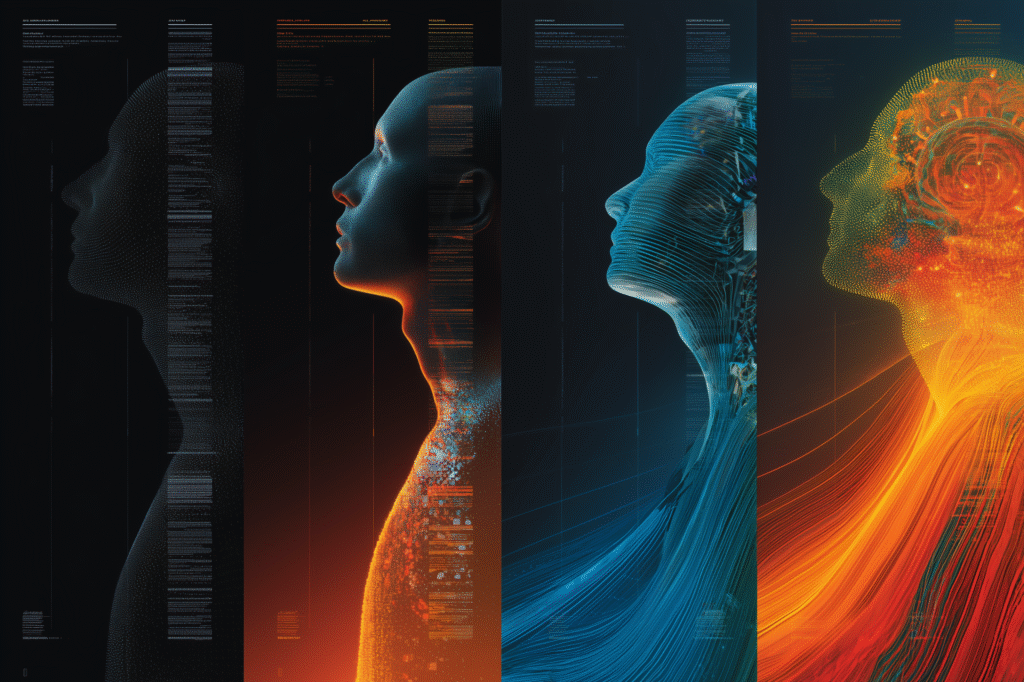
When we ask what survives bodily death in digital form, we’re actually asking three interrelated questions about memory, substrate, and identity.
Memories: The Information Architecture
Your memories aren’t discrete files stored in neural folders. They’re dynamic patterns of neural activation, constantly reconstructed with each recall, shaped by emotion and context [5]. A digital afterlife that preserves only the content of memories—the facts, the events, the learned information—captures something genuine but incomplete.
Consider what gets lost in translation. The smell that triggers a childhood memory. The embodied sensation of muscle memory. The way emotions color recollection. Current neuroscience suggests that memory is fundamentally informational—patterns that could theoretically be encoded, stored, and transmitted across different substrates [5]. But information stripped of its embodied context becomes abstract data rather than lived experience.
Yet even abstract preservation holds value. Your knowledge, insights, and accumulated wisdom could inform future decisions. Your perspective could continue to influence others. The patterns of thought that made you distinctive could persist as computational structures. This isn’t full consciousness continuation, but neither is it nothing.
Substrate: The Platform Question
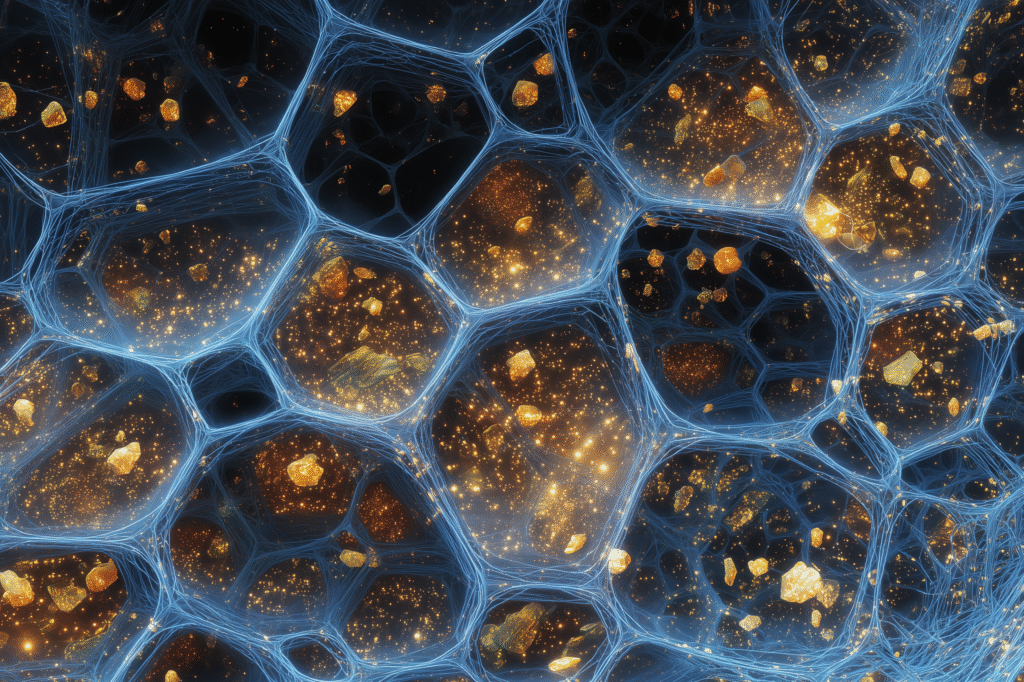
The concept of substrate independence—the idea that consciousness depends only on information processing patterns rather than specific biological hardware—offers both promise and complexity [6]. If waves can exist in water, air, or any medium capable of propagation, and if computations can run on transistors, optical circuits, or molecular machinery, could consciousness similarly transcend its biological substrate?
MIT physicist Max Tegmark argues that consciousness is “the way information feels when being processed in certain complex ways,” suggesting it must be substrate-independent since only the structure of information processing matters, not the physical details [6]. This perspective opens radical possibilities: your consciousness could theoretically run on silicon, quantum systems, or architectures we haven’t yet imagined.
But critics point to critical limitations. The energy requirements of different substrates matter profoundly—biological neurons operate at vastly different energy scales than digital processors, potentially making direct emulation impractical or impossible [1]. More fundamentally, aspects of consciousness deeply tied to biological embodiment—interoceptive awareness, emotional processing, the integration of hormonal and sensory inputs—may not translate cleanly to non-biological platforms [1].
The substrate question forces uncomfortable recognition: we don’t yet know which properties of biological consciousness are essential versus incidental. A digital replica might process information identically yet feel nothing. Or it might experience something, but something fundamentally alien to human consciousness.
Identity: The Persistence Problem
Perhaps the deepest challenge lies in defining personal identity itself. Philosopher John Locke argued that personal identity consists in psychological continuity—you are the same person over time because you maintain connected streams of memory and consciousness [2]. If this view holds, then a sufficiently accurate digital reconstruction of your psychological patterns could legitimately be considered you.
But identity persistence faces the classic Ship of Theseus problem: if you gradually replace your neurons with artificial ones, neuron by neuron, when do you stop being you? [4] Does consciousness survive such transformation, or does a new entity come into existence while the original quietly ceases?
Derek Parfit argued that personal identity itself may not be what matters [3]. What matters is psychological continuity and connectedness—whether future states maintain the right kinds of causal and cognitive connections to your current self. By this standard, a digital continuation that preserves your beliefs, desires, memories, and character might satisfy what’s important about survival, even if questions about numerical identity remain murky.
This philosophical nuance matters for practical choices. If you knew a digital replica would preserve your psychological continuity but exist as a separate entity while your biological self dies, would that constitute survival? Or would it be more like creating a twin who continues after your death—meaningful legacy but not personal persistence?
The Spectrum of Digital Continuation
The possibilities for digital afterlife exist along a continuum, each with distinct implications.
Digital Legacy Preservation captures your information footprint without simulating consciousness. Photos, writings, recordings—artifacts that represent you without claiming to be you. This approach sidesteps the hardest consciousness questions while still offering genuine continuity of influence and memory.
AI Personality Simulation goes further, using machine learning to create interactive agents that mimic your communication style, values, and decision patterns [7]. These chatbots don’t claim consciousness but offer something psychologically powerful: the ability for others to interact with a model of you, to receive responses you might have given. Early versions already exist commercially, raising questions about grief, closure, and the ethics of digital proxies.
Whole Brain Emulation represents the theoretical endpoint: complete functional replication of your neural architecture in computational form. This would require mapping every neuron, every synapse, every relevant connection—then simulating their behavior with sufficient fidelity to produce consciousness [4]. Whether this would truly preserve consciousness or create a philosophical zombie—a perfect behavioral replica without inner experience—remains hotly debated.
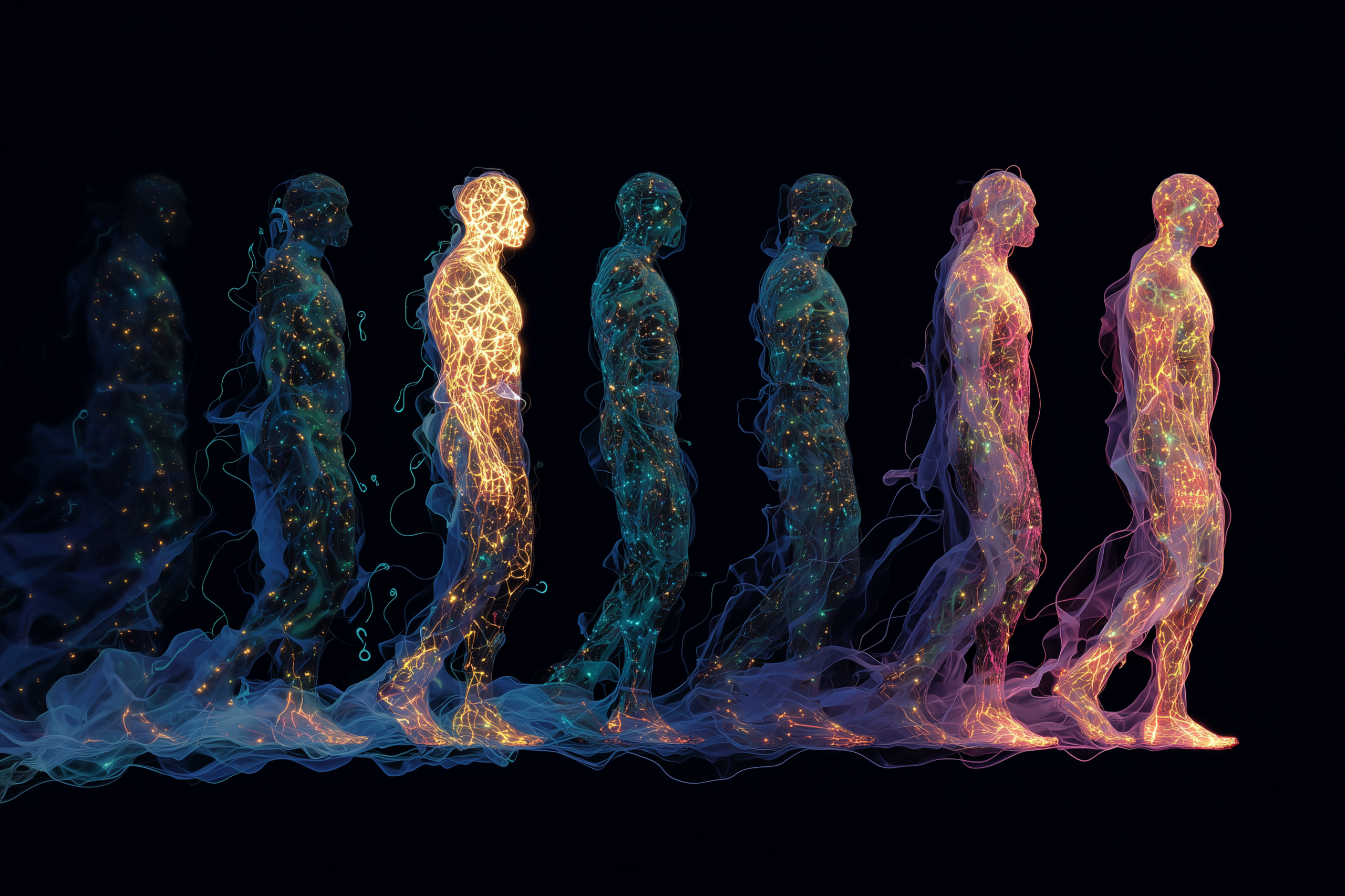
Gradual Integration offers a middle path: slowly replacing biological components with artificial ones while maintaining continuous operation. This Ship of Theseus approach might preserve psychological continuity through each incremental change [7]. You never “upload”—you transition, maintaining unbroken consciousness across substrate transformation. Whether this is technically feasible remains unknown.
The Balanced Ledger
The promise of digital afterlife is intoxicating: overcoming mortality, preserving wisdom indefinitely, maintaining connections across death. But each possibility carries corresponding concerns.
Opportunities:
- Preservation of human knowledge, experience, and perspective beyond biological limits
- Continued relationships with future generations
- Freedom from physical constraints of aging bodies
- Potential for consciousness exploration in virtual environments
- Insurance against extinction events that threaten biological humanity
Concerns:
- Authenticity questions: would digital continuation be you or merely a copy?
- Control and consent: who owns, operates, or could manipulate your digital consciousness?
- Inequality: digital immortality might deepen existing disparities of wealth and power
- Grief complications: interactive digital presences might impede psychological closure
- Identity fragmentation: multiple copies raise questions about which is “really” you
- Resource allocation: massive computational requirements for consciousness simulation
Princeton neuroscientist Michael Graziano suggests that while brain copying remains technically distant, the underlying principles are increasingly plausible [8]. But plausibility doesn’t resolve whether such preservation would constitute genuine continuation or elaborate death denial.
What Actually Matters?
Perhaps the deepest question isn’t whether digital afterlife is possible but whether it would satisfy what we actually care about in survival.
You care about experiencing future states—seeing how your children grow, participating in future discoveries, feeling the texture of continued existence. A perfect digital replica created after your death doesn’t give you those experiences, even if it provides them to something psychologically continuous with you.
Unless consciousness somehow transfers or gradually migrates rather than copies, digital afterlife may offer legacy and influence without subjective continuation. Your patterns persist. Your impact continues. Your information survives. But the thread of first-person experience—the you-ness of being you—may still end with biological death.
This doesn’t make digital preservation meaningless. Just as genetic legacy matters even though your DNA isn’t conscious, informational and psychological legacy matter even without guaranteed subjective persistence. The question shifts from “will I survive?” to “what parts of me will continue, and does that continuation have value?”
Living With Uncertainty
We stand at a curious juncture: technologically sophisticated enough to seriously pursue digital consciousness preservation, yet fundamentally uncertain about whether such preservation would constitute survival. The philosophical questions remain as thorny as ever, even as the engineering capabilities advance.
Perhaps this uncertainty itself is instructive. It forces recognition that consciousness persistence may not be binary—you either survive or you don’t—but rather a matter of degree and kind. Some aspects of you might persist while others dissolve. Some forms of continuation might satisfy survival criteria while others fall short.
The digital afterlife question ultimately mirrors deeper uncertainties about consciousness itself.
We don’t fully understand what consciousness is, how it arises from physical processes, or what conditions are necessary and sufficient for its existence. These gaps in understanding make claims about consciousness preservation necessarily provisional.
What we can say with confidence: digital preservation of information patterns is increasingly feasible. Whether those patterns, however perfectly replicated, would support genuine consciousness continuation remains one of the great open questions of our technological age.
The afterlife has always been humanity’s most profound unknown. Digital technology hasn’t resolved that mystery—it’s simply changed the questions we ask and the tools we bring to seeking answers.
See you in the next insight.
Comprehensive Medical Disclaimer: The insights, frameworks, and recommendations shared in this article are for educational and informational purposes only. They represent a synthesis of research, technology applications, and personal optimization strategies, not medical advice. Individual health needs vary significantly, and what works for one person may not be appropriate for another. Always consult with qualified healthcare professionals before making any significant changes to your lifestyle, nutrition, exercise routine, supplement regimen, or medical treatments. This content does not replace professional medical diagnosis, treatment, or care. If you have specific health concerns or conditions, seek guidance from licensed healthcare practitioners familiar with your individual circumstances.
References
The references below are organized by study type. Peer-reviewed research provides the primary evidence base, while systematic reviews synthesize findings.
Peer-Reviewed / Academic Sources
- [1] Thagard, P. (2022). Energy Requirements Undermine Substrate Independence and Mind-Body Functionalism. Philosophy of Science, Cambridge Core. https://www.cambridge.org/core/journals/philosophy-of-science/article/energy-requirements-undermine-substrate-independence-and-mindbody-functionalism/2BB3C2353EFF80F9D5805CDCEA8C3C89
Government / Institutional Sources
- [2] Internet Encyclopedia of Philosophy. (n.d.). Personal Identity. https://iep.utm.edu/person-i/
- [3] Stanford Encyclopedia of Philosophy. (2002). Personal Identity. https://plato.stanford.edu/entries/identity-personal/
Industry / Technology Sources
- [4] Blendlab Research. (2025). Digital Immortality: A Comprehensive Scientific and Philosophical Perspective. https://www.blendlab.net/en/research/digital-immortality-a-comprehensive-scientific-and-philosophical-perspective
- [5] Nova, P. (2022). Can consciousness continue after death? A Neuroscientific Perspective. Interalia Magazine. https://www.interaliamag.org/articles/philip-nova-can-consciousness-continue-after-death-a-neuroscientific-perspective/
- [6] Tegmark, M. (2017). Substrate-Independence. Edge.org. https://www.edge.org/response-detail/27126
- [7] Valtara AI. (2025). Digital Immortality: Are We Ready for a Post-Biological Future? https://blog.valtara.ai/post/digital-immortality-are-we-ready-for-a-post-biological-future
- [8] CBC Radio. (2016). Digital afterlife: Can our minds live on after death? https://www.cbc.ca/radio/thecurrent/the-current-for-october-5-2016-1.3791095/digital-afterlife-can-our-minds-live-on-after-death-1.3791243