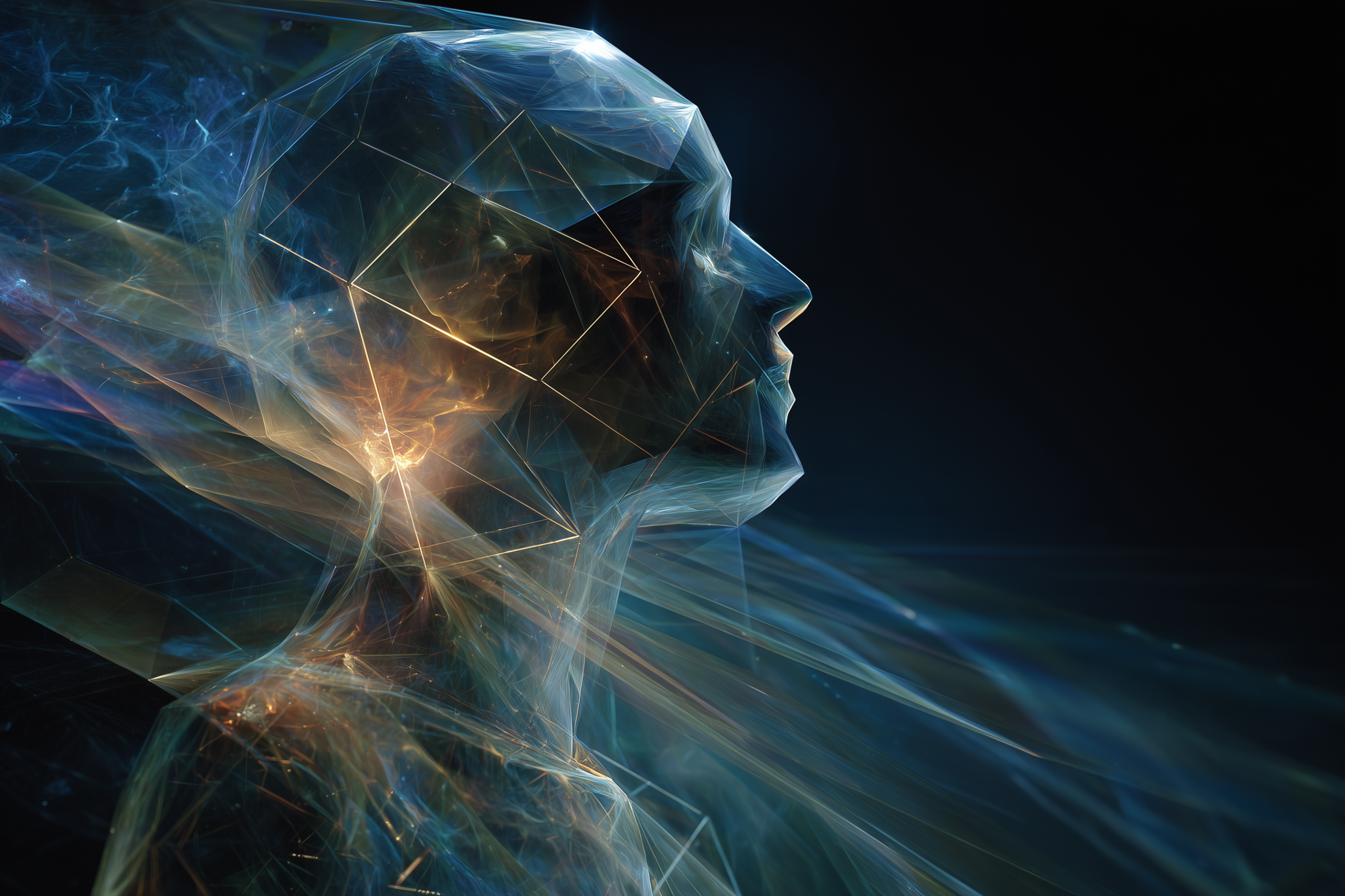
The minimum requirements for being human are being rewritten—not by evolution, but by the convergence of technology and consciousness itself.
Note: This article is for educational and informational purposes only. See full disclaimer at the end.
We’ve spent millennia debating what makes us human.
Now we face a different question: what should the baseline human experience include? When brain-computer interfaces can restore lost abilities, when AI can augment decision-making, and when consciousness practices can expand awareness, the old definitions of “normal” human capability start to look arbitrary.
We’re not just treating deficits anymore, we’re reconsidering what the foundation should be.
The shift is already happening. The paralyzed man who controls a computer cursor with his thoughts [1] isn’t being restored to an old baseline. He’s accessing capabilities most “normal” humans don’t possess. The meditator who deliberately alters their brain states through practice [2] isn’t just managing stress—they’re demonstrating conscious control over neural architecture.
These aren’t edge cases. They’re previews of a recalibrated human standard.
The Technology-Consciousness Convergence
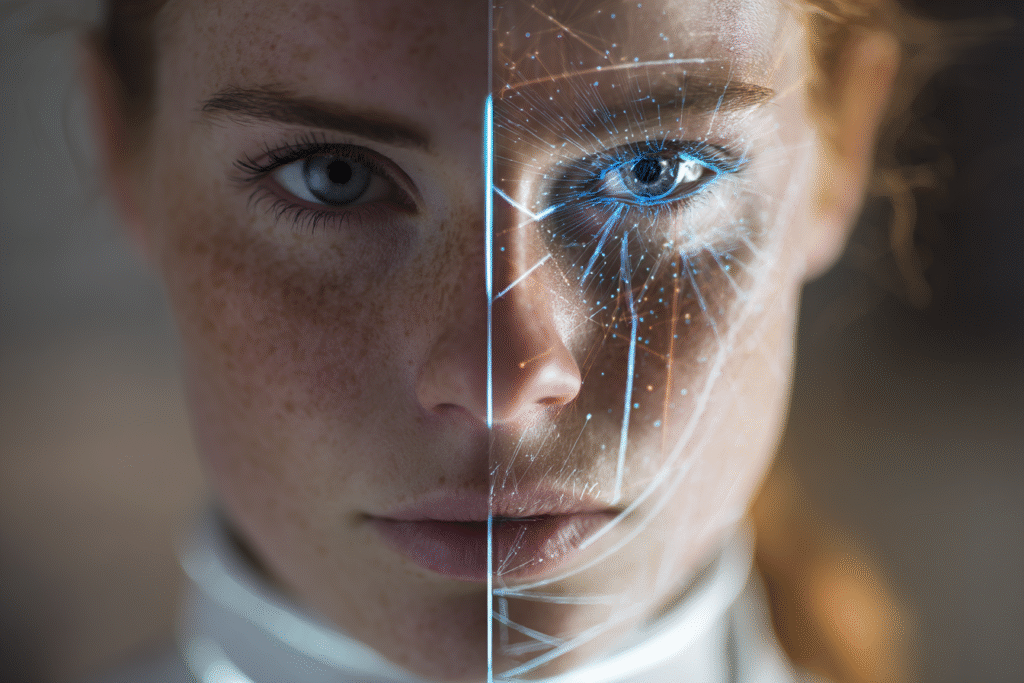
Enhancement isn’t just technological anymore. The most profound shifts happen when external tools meet internal development. A brain-computer interface isn’t just hardware—it’s a partnership between silicon and awareness [3]. An AI cognitive aid isn’t just software—it’s an extension of the thinking process itself. The boundary between tech-enabled and consciousness-enabled enhancement has become meaningless.
Consider what’s already standard in 2025: continuous glucose monitors that create feedback loops between metabolism and awareness. Wearables that translate subtle physiological signals into conscious information. Apps that guide meditation states previously accessible only to decades-long practitioners. These aren’t enhancements in the traditional sense—they’re foundations. The question isn’t whether to enhance, but what baseline we’re enhancing from.
The real transformation happens in the synthesis [4]. Technology provides new sensory input—data about brain states, metabolic patterns, attention dynamics. Consciousness provides the integration capacity—the ability to receive that information and reconfigure internal experience. Neither alone creates the enhanced baseline. Together, they’re redefining what’s possible.
The Ethics Paradox
Here’s the problem: we can’t agree on what we’re enhancing toward. Is the goal longevity? Productivity? Creativity? Happiness? Moral behavior? Each answer creates a different enhanced human, and most answers conflict [5].
The therapy-enhancement distinction—once considered crucial—has collapsed [6]. When a brain implant restores movement to the paralyzed, that’s therapy. When the same technology allows faster reflexes than biological baseline, that’s enhancement. But where’s the line? If someone’s “normal” was always impaired compared to human potential, restoring them to what they could have been isn’t therapy or enhancement—it’s justice.
The access question makes everything more complex. Enhancement technologies follow the pattern of all powerful tools: early access goes to those with resources [7]. But unlike previous technologies, cognitive and consciousness enhancements aren’t just quality-of-life improvements—they’re capability multipliers. The enhanced don’t just live better; they think differently, perceive more, integrate faster. Each advancement widens the gap.
Some argue this creates obligations [8]. If we can safely enhance human capability, do we have a duty to ensure universal access? Or does the very idea of universal enhancement erase the diversity that makes humanity adaptable? These aren’t hypothetical ethics problems—they’re decisions being made now, every time a new enhancement technology gets approved or restricted.

The Identity Question
Enhancement changes more than capability—it changes who we are. When a brain-computer interface becomes part of daily cognition, when an AI becomes integrated into decision-making processes, when consciousness practices fundamentally alter perception, the person who emerges isn’t just an improved version of who they were [9]. They’re someone new.
The concern about “authenticity” keeps surfacing [10]. If your enhanced intelligence comes from an implant rather than study, is the achievement less yours? If your expanded awareness comes from neurofeedback rather than meditation, is the consciousness less authentic? These questions assume a clear distinction between tool and user, between enhancement and self. But consciousness doesn’t work that way. The tools we use change how we think, which changes who we become, which changes how we use tools. It’s recursive.
Perhaps the real question isn’t whether enhanced humans are authentic, but whether authenticity even applies. A person with perfect recall through neural backup isn’t pretending to remember—they genuinely remember. Someone with AI-augmented creativity isn’t faking ideas—they’re actually having ideas, just through a different process. The enhanced human isn’t imitating the capable human. They are capable, through different means.
The Consent Complexity
Who decides on enhancement, and when? The easy answer: autonomous adults choosing for themselves. The reality: nothing about enhancement is that simple [11].
Children can’t consent to enhancement, but parents will face enhancement decisions. Not enhancing might become a form of deprivation if enhancement becomes baseline. Enhancing too early might foreclose future choices about identity and capability. The child’s right to an open future conflicts with the parent’s obligation to provide advantage. There’s no clean resolution.
Then there’s the social dimension. Individual choice about enhancement happens within contexts of expectation and pressure. When enhanced cognition becomes standard in certain professions, opting out isn’t really optional. When consciousness expansion becomes normalized in certain communities, maintaining unexpanded awareness feels like choosing limitation. Individual autonomy bumps against social reality.
The collective implications cut deeper [12]. Enhancement decisions by individuals aggregate into species-level changes. If we enhance for intelligence but not for empathy, we create a smarter but less connected humanity. If we enhance for longevity but not for meaning, we create longer but potentially emptier lives. No single person’s enhancement choice determines these outcomes, but all of them together do.

Balanced Realism Required
The opportunity is real. Brain-computer interfaces are moving from research to reality [1]. Consciousness training is becoming technologically measurable and guidable [2]. The tools to expand human capability beyond historical limits exist and are improving. We can choose to use them to reduce suffering, expand creativity, deepen connection, extend life. The enhanced baseline could mean fewer people limited by disability, poverty of cognition, or constrained awareness.
But the risks match the promise. Every enhancement creates new vulnerabilities. Brain-computer interfaces can be hacked [3]. AI-augmented cognition can be manipulated. Consciousness practices can destabilize identity. Access inequality could create cognitive castes. Each capability we add is also a dependency we create. The enhanced human isn’t just more capable—they’re differently fragile.
The path forward requires acknowledging both. Yes, enhancement offers extraordinary possibilities for reducing human suffering and expanding human flourishing. Yes, enhancement carries serious risks of inequality, manipulation, and unintended identity changes. Both are true. The task isn’t to choose between optimism and caution—it’s to proceed with both simultaneously.
Toward New Standards
What should baseline human capability include in 2025 and beyond? The answer is being written through technology, practice, policy, and individual choices. Some elements seem increasingly necessary:
Cognitive fluency with AI tools—not dependence, but integration. The ability to work alongside artificial intelligence as naturally as we work alongside other humans. This doesn’t mean everyone needs implants, but it does mean everyone needs some form of cognitive-technological literacy that goes beyond using apps. It means understanding how to think with and through AI systems.
Conscious access to internal states—not perfection, but awareness. The capacity to perceive one’s own mental and emotional patterns with some clarity. This might come through meditation, neurofeedback, psychedelic therapy, or other approaches. The method matters less than the capability: knowing what’s happening in your own consciousness.
Technological literacy about enhancement itself—not expertise, but informed choice. Understanding what enhancement options exist, how they work, what they cost (in multiple senses), and what they change. The ability to make real choices about one’s own augmentation rather than defaulting to social pressure or ignorance.
Ethical frameworks for capability decisions—not rules, but reasoning. The tools to think through what capabilities to develop, when, and why. This includes both individual ethics (what should I enhance?) and collective ethics (what should we enable, encourage, or restrict?).
None of these are universally accessible yet. That’s the work ahead: making the enhanced baseline actually a baseline rather than a premium tier. The goal isn’t to make everyone the same, but to ensure everyone has access to the fundamental capabilities that technology and consciousness development now make possible.
Who We Become
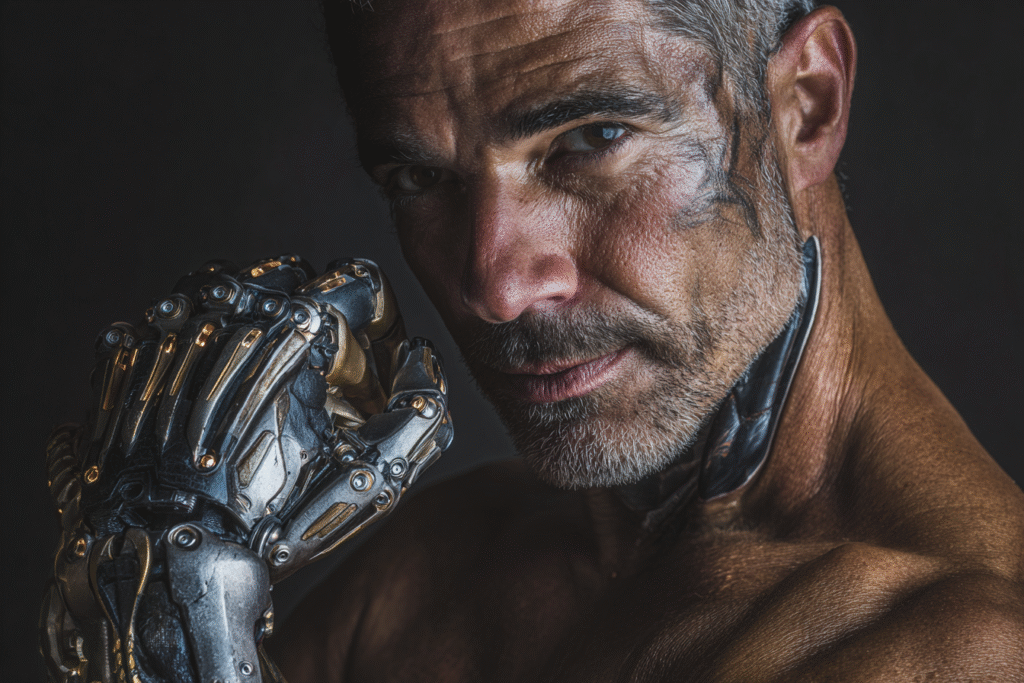
Enhancement will happen. That’s not a prediction—it’s already underway. The question is whether it happens through deliberate, ethical, collectively-agreed-upon frameworks, or through chaotic market forces and individual scrambling. Whether it reduces inequality or amplifies it. Whether it expands human diversity or narrows it. Whether it serves human flourishing or just human competition.
The enhanced human baseline isn’t a fixed destination. It’s a constantly moving target, adjusted by technology development, consciousness research, ethical reasoning, and social choice. Every decision about what to enhance, how to enhance it, who gets access, and what safeguards to implement shapes where that baseline moves.
We’re not just observers of this shift. We’re participants. Every choice about personal enhancement, every policy decision about access, every conversation about what capabilities matter—all of it determines what “human” means going forward. The baseline is being written now, through millions of individual and collective choices.
The question isn’t whether to enhance. It’s what kind of enhanced humanity we’re building, and whether everyone gets to be part of it.
See you in the next insight.
Comprehensive Medical Disclaimer: The insights, frameworks, and recommendations shared in this article are for educational and informational purposes only. They represent a synthesis of research, technology applications, and personal optimization strategies, not medical advice. Individual health needs vary significantly, and what works for one person may not be appropriate for another. Always consult with qualified healthcare professionals before making any significant changes to your lifestyle, nutrition, exercise routine, supplement regimen, or medical treatments. This content does not replace professional medical diagnosis, treatment, or care. If you have specific health concerns or conditions, seek guidance from licensed healthcare practitioners familiar with your individual circumstances.
References
The references below are organized by study type. Peer-reviewed research provides the primary evidence base, while systematic reviews synthesize findings.
Peer-Reviewed / Academic Sources
- [1] Technology Review. (2025). Brain-computer interfaces face a critical test. https://www.technologyreview.com/2025/04/01/1114009/brain-computer-interfaces-10-breakthrough-technologies-2025/
- [2] Medical Journal of Peking Union Medical College Hospital. (2025). Brain-Computer Interface: A Revolutionary Technology Expanding the Frontiers of the Human Brain. https://xhyxzz.pumch.cn/en/article/doi/10.12290/xhyxzz.2025-0152
- [3] Nature Electronics. (2025). A memristor-based adaptive neuromorphic decoder for brain–computer interfaces. https://techxplore.com/news/2025-02-braincomputer-interface-communication-efficiency.html
- [4] Frontiers in Genetics. (2025). An ethical framework for human genomic enhancement in China. https://www.frontiersin.org/journals/genetics/articles/10.3389/fgene.2025.1600829/full
- [5] PLOS Biology. (2024). Ethical considerations for the use of brain–computer interfaces for cognitive enhancement. https://journals.plos.org/plosbiology/article?id=10.1371/journal.pbio.3002899
- [6] ScienceDirect. (2024). The ethical acceptability of human enhancement technologies. https://www.sciencedirect.com/science/article/pii/S2949882124000525
Government / Institutional Sources
- [7] BMC Medical Ethics. (2017). Limits to human enhancement: nature, disease, therapy or betterment? https://bmcmedethics.biomedcentral.com/articles/10.1186/s12910-017-0215-8/
- [8] Cell Press. (2015). Cognitive Enhancement and Beyond: Recommendations from the Bioethics Commission. https://www.cell.com/trends/cognitive-sciences/fulltext/S1364-6613(15)00178-3/
Industry / Technology Sources
- [9] Ambula Healthcare. (2025). Neurotechnology & Brain-Computer Interfaces in 2025. https://www.ambula.io/neurotechnology-brain-computer-interfaces-in-2025/
- [10] Springer. (2025). Ethical Issues Regarding (Neuro-)Enhancement. https://link.springer.com/chapter/10.1007/978-94-024-2274-0_37
- [11] MDPI. (2020). The Ethics of Genetic Cognitive Enhancement: Gene Editing or Embryo Selection? https://www.mdpi.com/2409-9287/5/3/20/
- [12] Springer. (2025). Ethical and practical considerations for AI-driven deep brain stimulation. https://link.springer.com/article/10.1007/s43681-025-00724-6/