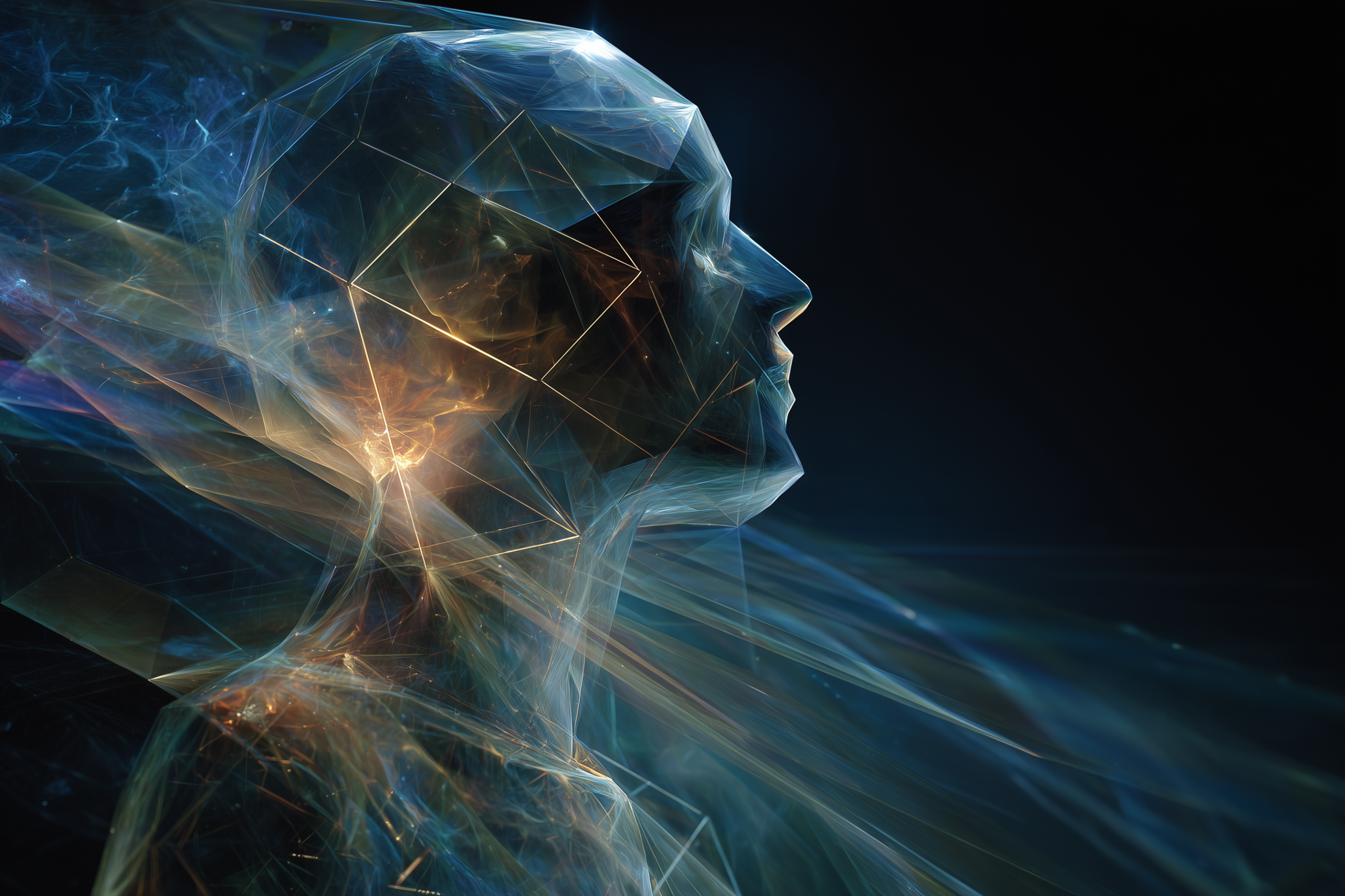
You’ve been using consciousness amplifiers your entire life without realizing it.
Note: This article is for educational and informational purposes only. See full disclaimer at the end.
That smartphone in your pocket? It’s not just a communication device—it’s an extension of your memory, your social connections, your ability to navigate the world.
Think about it: when you can’t remember an actor’s name and reach for your phone, you’re not “cheating” at memory—you’re using a tool that extends your cognitive capabilities beyond the biological boundaries of your brain.
This isn’t new. Humans have always been tool-users, from the first stone implements to writing systems that allowed us to store thoughts outside our skulls [8].
What’s different now is that AI represents the most sophisticated cognitive amplifier we’ve ever created, one that can actively collaborate with our thinking rather than passively store it.

The Shift from Replacement to Amplification
The headlines scream about AI replacing jobs, but they’re missing the real story. Yes, AI will replace certain tasks—the repetitive, the predictable, the purely computational. But here’s what most people don’t understand: AI isn’t replacing human intelligence; it’s amplifying what makes us uniquely human.
Consider how a designer uses MidJourney. They don’t type a prompt and walk away. They iterate, refine, bring their aesthetic judgment to bear on dozens of variations. The AI doesn’t replace their creativity—it amplifies their ability to explore possibilities at a speed and scale that would have been impossible just years ago [14]. The designer’s unique vision, their understanding of cultural context, their ability to connect emotionally with an audience—these remain irreplaceable. The AI simply allows them to manifest these qualities more powerfully.
This pattern repeats across every field. Writers using Claude or GPT-4 aren’t having their voices replaced; they’re breaking through creative blocks, exploring narrative directions they might not have considered, and handling the mechanical aspects of writing while focusing on the soul of their message [4]. Medical professionals using AI diagnostic tools aren’t becoming obsolete; they’re augmenting their pattern recognition capabilities while bringing the empathy, intuition, and holistic understanding that no algorithm can replicate [15].
The Irreplaceable Element
Here’s what the fearmongers don’t tell you: AI has access to the sum of documented human knowledge, but it doesn’t have your experience. It doesn’t know what it felt like when you failed at your first business venture and what specific lesson that taught you. It doesn’t understand the nuanced way your grandmother’s advice shaped your decision-making. It can’t replicate the unique pattern of connections your brain makes based on your particular journey through life.
This individual experience isn’t just valuable—it’s essential. When you collaborate with AI, you’re not just another user inputting prompts. You’re bringing a lifetime of context, relationships, failures, successes, and insights that no one else can provide. The AI amplifies these unique perspectives, helping you articulate them more clearly, explore them more deeply, and apply them more broadly [5].
Think about how you solve problems. You don’t just process information; you filter it through your experiences, your values, your understanding of human nature. When you use AI as a thinking partner, you’re not outsourcing this process—you’re enhancing it. The AI can process vast amounts of data, identify patterns, and generate possibilities, but you provide the wisdom to know which patterns matter, which possibilities align with human needs, and which solutions will actually work in the messy reality of human life.

The Extended Mind in Action
The concept of the “extended mind” suggests that our cognitive processes aren’t confined to our skulls—they extend into our environment through the tools we use [1]. A mathematician working through a problem on a whiteboard isn’t just using the board to display their thinking; the board becomes part of their cognitive process. The same is true for AI, but at a far more sophisticated level.
When you engage with an AI system, you’re not just getting answers—you’re creating a hybrid intelligence that combines your intuition, creativity, and experiential knowledge with the AI’s computational power and pattern recognition capabilities [2]. This isn’t about the AI doing the thinking for you; it’s about creating a new form of cognition that neither human nor machine could achieve alone.
Consider how this works in practice. When tackling a complex business problem, you might use AI to analyze market data, identify trends, and generate scenarios. But you bring the understanding of your company’s culture, your team’s capabilities, your customers’ unspoken needs. The AI amplifies your ability to process information, while you provide the context, judgment, and creative leaps that turn data into insight and insight into action [3].
Beyond Individual Amplification
The amplification effect extends beyond individual capability. When teams use AI collaboratively, they’re not just augmenting individual intelligence—they’re creating collective intelligence systems that can tackle problems no single mind could solve.
Imagine a research team where each member uses AI to amplify their specialized expertise. The biologist uses AI to analyze genetic sequences, the data scientist uses it to identify patterns, the ethicist uses it to explore implications, and the project manager uses it to synthesize findings and coordinate efforts. Each person’s unique perspective and expertise is amplified, and the collective output transcends what any individual—or any AI—could produce [11].
This collective amplification is already reshaping how we approach global challenges. Climate scientists use AI to process vast amounts of environmental data while bringing human understanding of complex systems and long-term consequences. Medical researchers use AI to accelerate drug discovery while applying human knowledge of biological complexity and patient needs. In each case, AI doesn’t replace human intelligence—it amplifies our ability to understand, connect, and create solutions [6].

The Cognitive Prosthetic Revolution
Just as physical prosthetics have evolved from simple replacements to sophisticated enhancements that can exceed biological capabilities, AI represents a cognitive prosthetic that doesn’t just fill gaps—it extends our mental reach [9].
Think of someone with a modern prosthetic leg. They’re not “disabled” in the traditional sense—elite athletes with prosthetics can outperform those with biological limbs in certain contexts. The prosthetic doesn’t make them less human; it makes them differently capable. The same is true for cognitive prosthetics. Using AI to enhance your thinking doesn’t make you less intelligent—it makes you differently intelligent, capable of cognitive feats that would be impossible with biological processing alone.
This shift in perspective is crucial. We don’t consider someone wearing glasses as having “artificial vision” or someone using a calculator as having “artificial mathematics.” These are tools that extend our natural capabilities. AI is simply the next evolution of this principle, but instead of augmenting our senses or basic calculations, it augments our ability to recognize patterns, generate ideas, and process complex information [10].
Navigating the Fear
It’s natural to feel apprehensive about AI. Every major technological shift has generated fear about human obsolescence. When writing was invented, Socrates worried it would destroy human memory. When calculators appeared, teachers feared students would lose basic math skills. When the internet emerged, critics worried it would isolate us from real human connection [2].
Each time, the fear was both right and wrong. Yes, we lost certain capabilities—few of us can recite epic poems from memory like our ancestors. But we gained so much more. Writing didn’t destroy memory; it freed us from the burden of memorization so we could focus on understanding and creation. Calculators didn’t make us worse at mathematics; they allowed us to tackle problems of unprecedented complexity.
AI follows this same pattern. Yes, we might lose certain skills—perhaps the ability to write a perfectly formatted business letter from scratch. But we gain the ability to communicate more effectively, to explore ideas more deeply, to solve problems more creatively. The key is not to resist the tool but to master it, to make it a true extension of ourselves rather than a replacement for our capabilities [7].

The Partnership Mindset
The most successful people in the AI age won’t be those who compete against machines or those who blindly delegate to them. They’ll be those who develop a true partnership mindset, who understand that AI is most powerful when it amplifies rather than replaces human intelligence.
This means learning to work with AI the way a conductor works with an orchestra. The conductor doesn’t play every instrument; they understand each instrument’s capabilities and limitations, and they blend them into something greater than the sum of its parts. Similarly, working with AI means understanding what it does well (processing vast amounts of data, identifying patterns, generating variations) and what you do well (providing context, making value judgments, understanding human needs), and orchestrating these capabilities into a harmonious whole [13].
It also means maintaining your uniquely human capabilities while embracing technological amplification. Empathy, creativity, moral reasoning, aesthetic judgment—these aren’t just “soft skills” that remain after automation. They’re the essential human elements that give meaning and direction to AI’s computational power [12].
Starting Your Amplification Journey
The beauty of AI as a consciousness amplifier is that you can start small. You don’t need to understand machine learning or neural networks. You just need curiosity and a willingness to experiment.
Start with your daily challenges. That report you’ve been putting off? Try using AI as a thinking partner to outline your ideas. That creative project that’s been stuck? Use AI to generate variations and see what sparks your imagination. That complex problem you’ve been wrestling with? Let AI help you see it from different angles.
The key is to approach AI not as a magic solution but as a collaborative partner. Be specific about what you need. Provide context from your experience. Push back when the output doesn’t match your vision. Iterate, refine, and blend the AI’s capabilities with your judgment [3].
Remember, every interaction is an opportunity to develop your skills as an AI collaborator. You’re not just learning to use a tool; you’re developing a new form of literacy, a new way of thinking that combines human and artificial intelligence into something unprecedented.

The Amplified Future
We stand at a threshold. The choice isn’t whether to embrace AI—it’s already here, already reshaping our world. The choice is how we engage with it. We can approach it with fear, seeing it as a threat to our humanity. Or we can approach it with curiosity, seeing it as the most powerful amplifier of human capability we’ve ever created.
Those who choose amplification over resistance will find themselves capable of things they never imagined. Not because the AI is doing the work for them, but because the partnership between human and artificial intelligence creates possibilities that neither could achieve alone. Writers will tell stories of unprecedented complexity and nuance. Scientists will solve problems that have puzzled us for generations. Artists will create works that touch hearts in ways we haven’t yet imagined.
But more importantly, ordinary people—people who never thought of themselves as particularly creative or capable—will discover that with AI as an amplifier, they can express ideas they couldn’t articulate, solve problems they couldn’t approach, and create value they couldn’t previously generate.
This isn’t about becoming less human. It’s about becoming more capable of expressing and manifesting what makes us human. Our experiences, our relationships, our values, our dreams—these remain ours alone. AI simply gives us new ways to explore, express, and extend these essentially human qualities into the world.
The future belongs not to AI or to humans, but to the partnership between them. It belongs to those who understand that technology’s highest purpose isn’t to replace human capability but to amplify it, to extend the reach of human consciousness and creativity into realms we’re only beginning to imagine.
Your unique perspective, shaped by your singular journey through life, has never been more valuable. Because now, for the first time in history, you have access to a tool that can amplify that perspective into something that can truly change the world. The question isn’t whether AI will transform society—it’s whether you’ll be an active participant in that transformation, using AI to amplify your uniquely human gifts, or a passive observer, watching as others shape the future.
The choice, as always, is yours. But know this: the tools are here, they’re accessible, and they’re waiting for you to pick them up and discover what you’re truly capable of when your human consciousness is amplified by the most powerful thinking machines we’ve ever created.
See you in the next insight.
Comprehensive Medical Disclaimer: The insights, frameworks, and recommendations shared in this article are for educational and informational purposes only. They represent a synthesis of research, technology applications, and personal optimization strategies, not medical advice. Individual health needs vary significantly, and what works for one person may not be appropriate for another. Always consult with qualified healthcare professionals before making any significant changes to your lifestyle, nutrition, exercise routine, supplement regimen, or medical treatments. This content does not replace professional medical diagnosis, treatment, or care. If you have specific health concerns or conditions, seek guidance from licensed healthcare practitioners familiar with your individual circumstances.
References
The references below are organized by study type. Peer-reviewed research provides the primary evidence base, while systematic reviews synthesize findings.
Peer-Reviewed / Academic Sources
- [1] Hernández-Orallo, J., (2025). Enhancement and assessment in the AI age: An extended mind perspective. SAGE Journals. https://journals.sagepub.com/doi/10.1177/18344909241309376?icid=int.sj-abstract.similar-articles.7
- [2] Clark, A., (2025). Extending Minds with Generative AI. Nature Communications. https://www.nature.com/articles/s41467-025-59906-9
Government / Institutional Sources
- [3] World Economic Forum, (2025). How to support human-AI collaboration in the Intelligent Age. World Economic Forum. https://www.weforum.org/stories/2025/01/four-ways-to-enhance-human-ai-collaboration-in-the-workplace/
- [4] Carnegie Mellon University, (2025). Human-AI Collaboration Can Unlock New Frontiers in Creativity. CMU School of Computer Science. https://www.cs.cmu.edu/news/2025/ai-augments-creativity
- [5] World Economic Forum, (2025). How we can elevate uniquely human skills in the age of AI. World Economic Forum. https://www.weforum.org/stories/2025/01/elevating-uniquely-human-skills-in-the-age-of-ai/
- [6] Microsoft, (n.d.). Amplifying human ingenuity through artificial intelligence. Microsoft Cloud for Global Good. https://news.microsoft.com/cloudforgood/policy/briefing-papers/responsible-cloud/amplifying-human-ingenuity-artificial-intelligence.html
- [7] University of Illinois Springfield, (n.d.). The Future of Work: Leveraging Human Potential with AI. University of Illinois Springfield. https://www.uis.edu/news/future-work-leveraging-human-potential-ai
Industry / Technology Sources
- [8] Wikipedia, (2025). Extended mind thesis. Wikipedia. https://en.wikipedia.org/wiki/Extended_mind_thesis
- [9] IntechOpen, (2020). Application of Artificial Intelligence (AI) in Prosthetic and Orthotic Rehabilitation. IntechOpen. https://www.intechopen.com/chapters/73486
- [10] IEEE Digital Reality, (n.d.). What is Augmented Intelligence? IEEE Digital Reality. https://digitalreality.ieee.org/publications/what-is-augmented-intelligence
- [11] TS2 Tech, (2025). Augmented AI Revolution: How Human-AI Collaboration is Reshaping 2025. TS2 Tech. https://ts2.tech/en/augmented-ai-revolution-how-human-ai-collaboration-is-reshaping-2025/
- [12] Workday, (2025). New Global Research from Workday Reveals AI Will Ignite a Human Skills Revolution. Workday Investor Relations. https://investor.workday.com/2025-01-14-New-Global-Research-from-Workday-Reveals-AI-Will-Ignite-a-Human-Skills-Revolution
- [13] Superhuman, (2025). Using AI in the workplace: the remarkable shift from automation to amplification. Superhuman Blog. https://blog.superhuman.com/using-ai-in-the-workplace/
- [14] SmythOS, (2025). Exploring Human-AI Collaboration in Creative Industries. SmythOS. https://smythos.com/ai-industry-solutions/entertainment/human-ai-collaboration-in-creative-industries/
- [15] McKinsey & Company, (2025). AI in the workplace: A report for 2025. McKinsey Digital. https://www.mckinsey.com/capabilities/mckinsey-digital/our-insights/superagency-in-the-workplace-empowering-people-to-unlock-ais-full-potential-at-work