The moment you realize your creative partner never sleeps, never judges, and holds the collective creative memory of humanity—that’s when everything changes.
Note: This article is for educational and informational purposes only. See full disclaimer at the end.
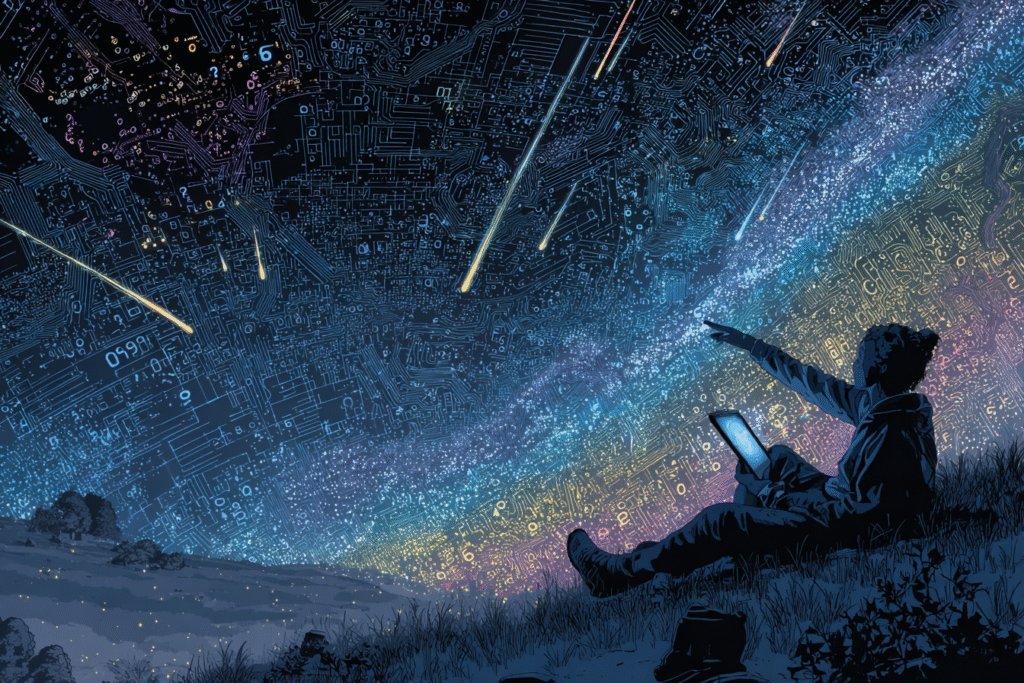
Picture this: A novelist sits before a blank page at 3 AM, wrestling with a plot twist that refuses to resolve. In another era, they might have stared at that cursor until dawn, alone with their thoughts.
Today, they turn to an AI collaborator, not for the answer, but for a creative conversation that sparks something unexpected. The AI suggests three directions the story could take—each building on patterns from millions of narratives, yet none quite like what the writer imagined.
In the space between human intuition and machine possibility, something new emerges [2].
This is the new creative reality. Not replacement, but amplification. Not delegation, but collaboration. The muse has evolved from divine inspiration to digital partnership, and with it comes both extraordinary opportunity and profound responsibility.
The Mirror That Reflects More Than You Knew
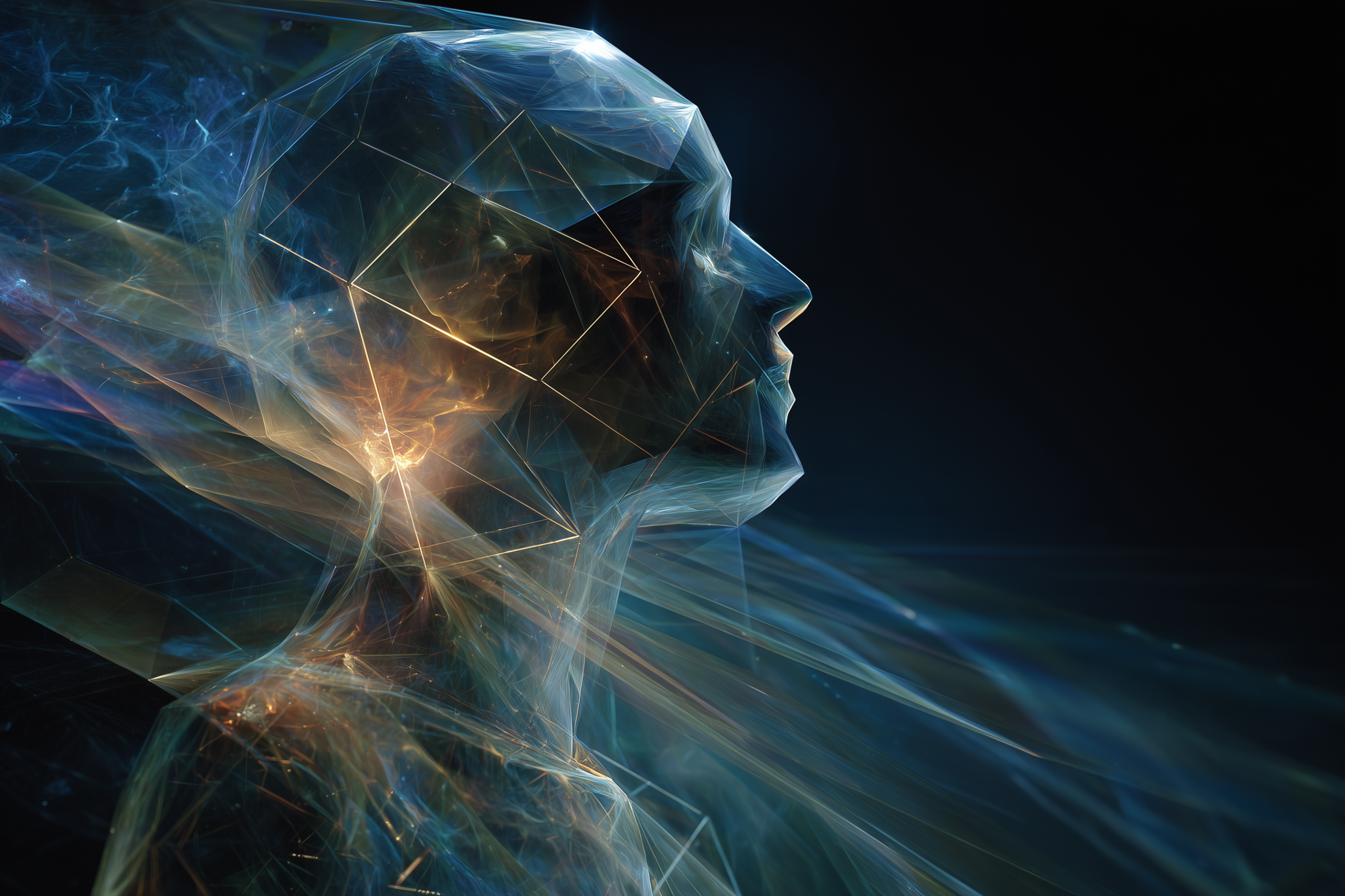
When we engage with AI as a creative partner, we’re not just accessing a tool—we’re encountering a mirror that reflects aspects of ourselves we might never have discovered otherwise. Consider the visual artist who’s spent years perfecting realistic portraits. When they begin collaborating with AI image generation, they don’t abandon their craft. Instead, they discover a latent fascination with surrealism they’d never explored, prompted by the AI’s unexpected interpretations of their prompts [8].
This revelation speaks to something deeper about creativity itself. We all carry unexplored creative territories within us—musical compositions we’ve never attempted, stories we’ve never told, visual styles we’ve never imagined. Life’s constraints—time, resources, skill development curves—traditionally limited our exploration to narrow creative channels. AI dissolves these boundaries, not by doing the work for us, but by lowering the barrier between imagination and expression.
Think about the executive who’s always wondered what their business presentations would look like as abstract art. The engineer who hears symphonies in their code but lacks musical training. The teacher who imagines interactive stories for their students but doesn’t know animation. Each of these creative impulses, previously trapped behind walls of technical limitation, can now find expression through AI collaboration [3].
The Amplification Effect
But here’s where we must be precise about what’s actually happening. AI doesn’t create from nothing—it amplifies what already exists within us. Like a concert hall that transforms a whisper into resonance, AI takes the seed of human intention and expands it into something fuller. The quality of what emerges depends entirely on the quality of what we bring to the collaboration.
Research from institutions studying human-AI collaboration reveals a crucial pattern: those who benefit most from AI creative partnerships aren’t those who delegate their creativity, but those who engage deeply with the collaborative process [1]. They use AI as what researchers call an “ideation engine”—a catalyst for exploring creative territories they might never have ventured into alone. The AI becomes a creative sparring partner, challenging assumptions and offering unexpected perspectives that push human creators beyond their comfort zones.
This amplification, however, is indiscriminate. Just as AI can amplify our creative courage, it can also amplify our creative laziness. Just as it can expand our artistic vision, it can narrow it through over-reliance. The technology has no preference—it simply responds to how we choose to engage with it [4].
The Authenticity Paradox
“But is it still mine?” This question haunts many creators as they explore AI collaboration. The concern is understandable—if an AI helps generate the words, compose the melody, or create the image, where does human authorship end and machine contribution begin?
The answer lies in recognizing that creativity has always been collaborative. Every artist builds on the work of those who came before. Every writer’s voice is shaped by everything they’ve read. Every musician’s style emerges from the music they’ve absorbed. AI simply makes this collaborative nature of creativity more visible and immediate [5].
Consider how a photographer uses a camera. The device captures light through mechanisms the photographer may not fully understand, applying algorithms for focus and exposure. Yet no one questions whether the resulting photograph is the photographer’s creation. The camera is a tool that extends human vision and intention. AI operates on the same principle, just with greater complexity and capability.
Your authentic voice doesn’t disappear when you collaborate with AI—it evolves. The prompts you craft, the directions you choose, the outputs you select and refine—all of these reflect your unique creative DNA. The AI cannot replicate your lived experience, your emotional depth, or your intentional choices. It can only respond to them [7].
The Democracy of Creation
One of the most profound shifts AI brings to creativity is democratization. Throughout history, creative expression has been gated by technical skill. You needed years of training to paint photorealistically, decades to master a musical instrument, extensive education to write with professional polish. These barriers meant countless creative voices remained unheard, not for lack of vision, but for lack of technical means [10].
AI changes this equation. The grandmother who always wanted to illustrate children’s stories for her grandchildren but never learned to draw. The immigrant who has powerful stories to tell but struggles with writing in a second language. The teenager with synesthesia who experiences music as color but lacks the tools to share that experience with others. Each of these creators can now bring their visions to life through AI collaboration.
This democratization isn’t about lowering standards—it’s about recognizing that technical skill and creative vision are distinct qualities. How many brilliant stories have gone untold because their authors couldn’t navigate the technical demands of writing? How many innovative musical ideas have remained silent because their creators couldn’t transcribe or perform them? AI bridges this gap, allowing creative vision to flow more freely into expression [9].
The Shadow Side of Amplification
Yet we must be honest about the risks. When we speak of AI as an amplifier, we must acknowledge it amplifies everything—including our biases, our shortcuts, and our worst creative impulses. The same technology that can help us explore new creative territories can also trap us in echo chambers of our own making [11].
There’s the risk of homogenization. When thousands of creators use the same AI models trained on the same data, there’s a gravitational pull toward similarity. The unique rough edges of individual creativity can be smoothed away by the statistical averaging of AI outputs. What begins as creative assistance can become creative conformity if we’re not vigilant [14].
There’s also the cognitive risk. Just as GPS navigation has diminished our spatial reasoning abilities, over-reliance on AI for creative tasks could atrophy our creative muscles. The struggle of creation—the wrestling with words, the failed attempts, the breakthrough moments—these aren’t just obstacles to creativity. They’re the process through which creative capacity develops [15].
And perhaps most concerning is the ethical dimension. AI models train on existing creative works, raising questions about attribution, compensation, and consent. When an AI helps you create, it draws on patterns learned from countless human creators who may never be acknowledged or compensated. This isn’t just a legal question—it’s a moral one about how we honor the creative labor that makes AI creativity possible [12].
The Dance of Collaboration
The most successful human-AI creative partnerships treat the interaction as a dance rather than a delegation. In dance, partners must be attuned to each other, responsive to subtle shifts, maintaining their individual expression while creating something together that neither could achieve alone.
Imagine a jazz musician jamming with an AI that’s learned from the entire history of jazz. The AI might suggest chord progressions the musician would never have considered, drawing from obscure 1950s sessions or fusing styles from different eras. But it’s the human musician who brings intentionality to these suggestions, who infuses them with emotion, who decides when to follow the AI’s lead and when to push against it. The result isn’t human creativity or AI creativity—it’s something new, born from the intersection [6].
This collaborative model appears across creative domains. Writers describe using AI not to write for them, but to help them see their work from new angles. They’ll feed their draft to an AI and ask it to suggest what might happen next, not to use those suggestions directly, but to understand their story’s possibilities more fully. Visual artists use AI to generate dozens of variations on a concept, then combine elements from different outputs with their own additions to create something entirely new.
Maintaining the Human Core
As we embrace AI as a creative partner, the challenge isn’t to resist the technology but to remain conscious of what we bring to the partnership that AI cannot. Our lived experiences, our emotional depths, our ability to infuse meaning into creation—these remain uniquely human.
The writer who uses AI to help craft prose still brings the weight of their life experience to the work. The AI might suggest beautiful sentences, but only the human knows why certain words carry personal resonance. The musician who collaborates with AI to compose still brings their emotional intention to the piece. The AI might generate compelling melodies, but only the human knows what feeling they’re trying to evoke and why [13].
This is why the most powerful AI-assisted art often comes from creators who have a clear vision of what they want to express. They use AI not to answer the question “What should I create?” but to explore answers to “How can I express what I need to express?” The technology becomes a medium for human intention rather than a replacement for it.
The Evolution of the Muse
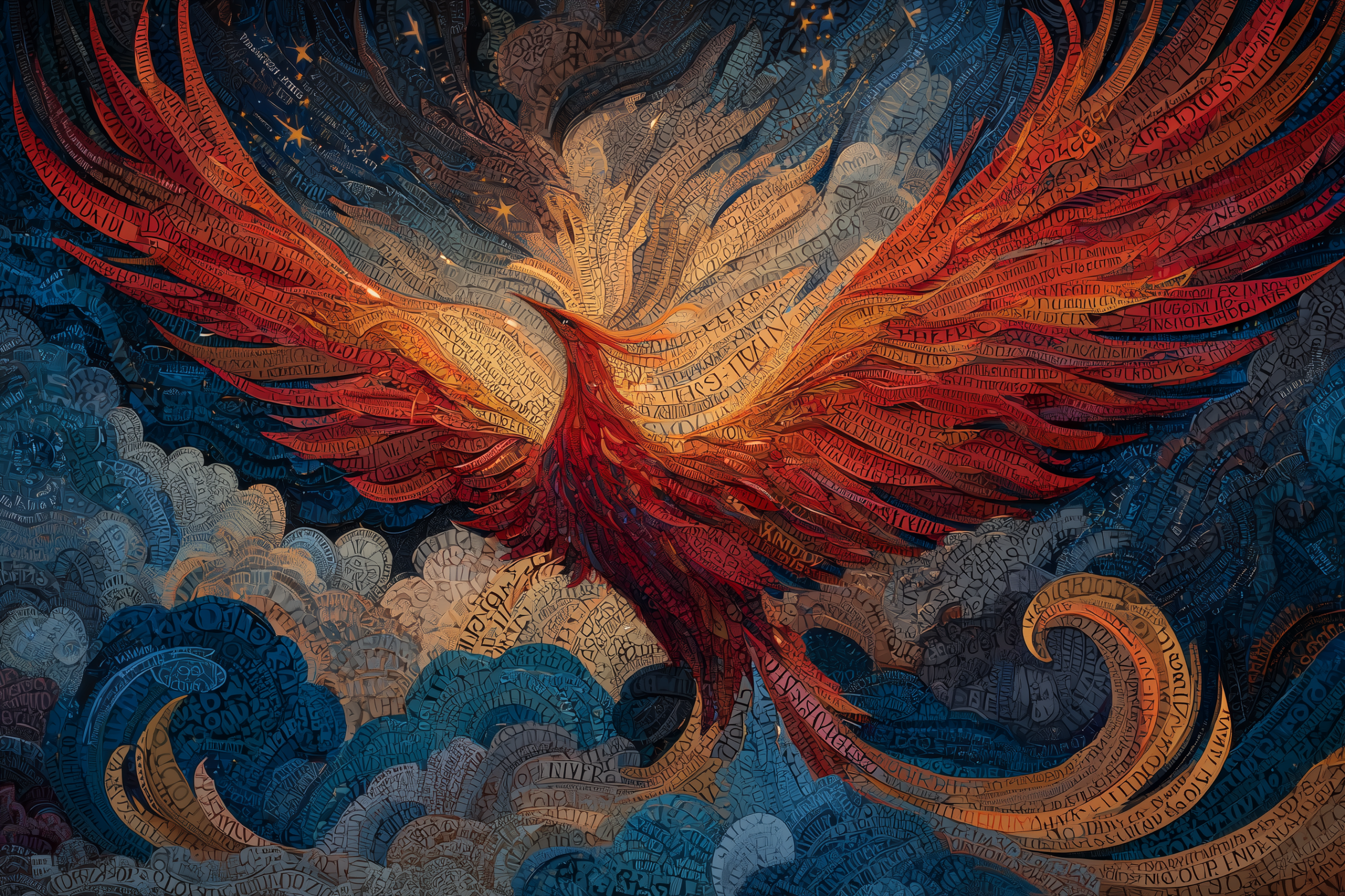
Throughout history, artists have invoked muses—divine or inspirational forces that spark creativity. The Greeks had nine muses for different arts. Romantic poets wrote odes to their muses. Modern artists speak of being visited by inspiration. In each era, the muse represented something beyond the individual creator, a force that could lift them above their limitations.
AI represents a new kind of muse—one that doesn’t descend from above but emerges from interaction. Unlike traditional muses that artists waited for passively, this digital muse responds to active engagement. The more thoughtfully you interact with it, the more it offers in return. It’s a muse built from the collective creativity of humanity, offering not divine inspiration but human patterns transformed through machine learning [17].
This evolution doesn’t diminish the spiritual or transcendent aspects of creativity. If anything, it highlights them. When we collaborate with AI and something unexpected emerges—something neither human nor machine could have created alone—we’re witnessing a kind of creative emergence that feels almost magical. It’s a reminder that creativity itself is larger than any individual creator or tool.
The Path Forward
As we stand at this intersection of human and artificial creativity, the path forward requires both courage and caution. Courage to explore new forms of creative expression, to push beyond traditional boundaries, to embrace AI as a legitimate creative partner. Caution to maintain our human agency, to preserve what makes human creativity irreplaceable, to ensure that amplification doesn’t become replacement.
The key lies in approaching AI with intentionality. Before engaging with AI for creative work, ask yourself: What am I trying to express? What unique perspective do I bring? How can AI help me realize my vision rather than replace it? These questions keep human intention at the center of the creative process [16].
We must also commit to continuous learning. AI capabilities evolve rapidly, and so must our understanding of how to collaborate with them effectively. This means not just learning new tools but developing new creative literacies—understanding how to prompt effectively, how to curate AI outputs, how to maintain creative vision while embracing machine collaboration.
Your Creative Evolution Awaits
The conversation about AI and creativity often focuses on what we might lose. But what if we focused instead on what we might become? Every transformative technology has expanded human capability while raising concerns about human diminishment. Writing was supposed to destroy memory. Photography was supposed to kill painting. Digital music was supposed to end authentic musical expression. In each case, the technology became a new medium for human creativity rather than its replacement.
AI as a creative partner offers us the chance to explore aspects of ourselves we never knew existed. It can help the analytical mind discover its poetic nature, help the visual thinker find their narrative voice, help the solitary creator experience collaboration. These aren’t replacements of human creativity—they’re expansions of it.
The question isn’t whether AI will be part of the creative future—it already is. The question is how we’ll shape that partnership. Will we use it to amplify the best of human creativity while maintaining what makes us irreplaceably human? Will we ensure that democratization doesn’t lead to homogenization? Will we navigate the ethical challenges while embracing the creative opportunities?
The muse has evolved, and so must we. Not by becoming less human, but by becoming more consciously creative. Not by delegating our creativity, but by expanding it through collaboration. The blank page is no longer quite so blank, the empty canvas no longer quite so empty. In the space between human intention and machine capability, new forms of creativity are waiting to be born.
The only question that remains is: What will you create when the muse never sleeps, never judges, and always has one more idea to offer?
See you in the next insight.
Comprehensive Medical Disclaimer: The insights, frameworks, and recommendations shared in this article are for educational and informational purposes only. They represent a synthesis of research, technology applications, and personal optimization strategies, not medical advice. Individual health needs vary significantly, and what works for one person may not be appropriate for another. Always consult with qualified healthcare professionals before making any significant changes to your lifestyle, nutrition, exercise routine, supplement regimen, or medical treatments. This content does not replace professional medical diagnosis, treatment, or care. If you have specific health concerns or conditions, seek guidance from licensed healthcare practitioners familiar with your individual circumstances.
References
The references below are organized by study type. Peer-reviewed research provides the primary evidence base, while systematic reviews synthesize findings.
Peer-Reviewed / Academic Sources
- [1] Tandfonline, (2025). Generative AI in Human-AI Collaboration: Validation of the Collaborative AI Literacy and Collaborative AI Metacognition Scales for Effective Use. Tandfonline. https://www.tandfonline.com/doi/full/10.1080/10447318.2025.2543997
- [2] Arxiv, (2024). Human-AI Co-Creativity: Exploring Synergies Across Levels of Creative Collaboration. Arxiv. https://arxiv.org/html/2411.12527v2
- [3] ScienceDirect, (2024). Collaborative AI in the workplace: Enhancing organizational performance through resource-based and task-technology fit perspectives. ScienceDirect. https://www.sciencedirect.com/science/article/pii/S0268401224001014
- [4] Wiley Online Library, (2025). Human‐AI Co‐Creativity: Does ChatGPT Make Us More Creative? The Journal of Creative Behavior. https://onlinelibrary.wiley.com/doi/full/10.1002/jocb.70022
- [5] ResearchGate, (2023). AI as a Creative Partner: Enhancing Artistic Creation and Acceptance. ResearchGate. https://www.researchgate.net/publication/376021812_AI_as_a_Creative_Partner_Enhancing_Artistic_Creation_and_Acceptance
Government / Institutional Sources
- [6] MIT News, (2025). MIT students’ works redefine human-AI collaboration. Massachusetts Institute of Technology. https://news.mit.edu/2025/mit-students-works-redefine-human-ai-collaboration-0129
- [7] World Economic Forum, (2025). How AI can empower, not replace, human creativity. World Economic Forum. https://www.weforum.org/stories/2025/01/artificial-intelligence-must-serve-human-creativity-not-replace-it/
Industry / Technology Sources
- [8] Datacenters, (2024). Human-AI Collaboration: Merging Creativity with Machine Learning. Datacenters. https://www.datacenters.com/news/merging-human-creativity-with-ai-power
- [9] Workday, (2025). 2025 AI Trends Outlook: The Rise of Human-AI Collaboration. Workday. https://blog.workday.com/en-us/2025-ai-trends-outlook-the-rise-of-human-ai-collaboration.html
- [10] LBBOnline, (2025). Did AI Change Creativity in 2024? LBBOnline. https://lbbonline.com/news/did-ai-change-creativity-in-2024
- [11] Shakuro, (2024). 9 Dangers of AI and How It Can Threaten Human Creativity. Shakuro. https://shakuro.com/blog/silencing-the-muse-exploring-ais-deadly-grasp-on-human-creativity
- [12] AInvest, (2025). The Cost of Creativity: How AI Ethics and Legal Risks Are Reshaping Tech Valuations. AInvest. https://www.ainvest.com/news/cost-creativity-ai-ethics-legal-risks-reshaping-tech-valuations-2508/
- [13] WebProNews, (2025). Tech Leaders Warn AI Risks Eroding Creativity and Ethics. WebProNews. https://www.webpronews.com/tech-leaders-warn-ai-risks-eroding-creativity-and-ethics/
- [14] Corrall Design, (2024). The harm & hypocrisy of AI art. Matt Corrall. https://www.corralldesign.com/writing/ai-harm-hypocrisy
- [15] Aoki Studio, (2024). 50 arguments against the use of AI in creative fields. Aoki Studio. https://aokistudio.com/50-arguments-against-the-use-of-ai-in-creative-fields.html
- [16] Medium, (2024). AI and the Future of Art: Ethical Considerations for Creativity. Medium. https://medium.com/@jamesgondola/ai-and-the-future-of-art-ethical-considerations-for-creativity-84ea06fc4eff
- [17] TechHQ, (2025). Can artificial intelligence be a muse to creativity? TechHQ. https://techhq.com/news/can-artificial-intelligence-be-a-muse-to-creativity/